The Modern Luxury Bathroom: A Guide to Materials, Lighting, and Timeless Design
A modern luxury bathroom is not defined by expensive fixtures or an abundance of decorative details. Its appeal comes from thoughtful planning, carefully selected materials, comfortable proportions, and an atmosphere that makes everyday routines feel more considered.
The most successful bathroom designs balance visual elegance with practical requirements. Surfaces must withstand moisture, storage should be easy to use, lighting should support different activities, and every fixture should work comfortably within the available space.
Whether you are renovating an existing bathroom or planning a new one, understanding these design principles can help you create a space that feels refined without sacrificing functionality.
1. Begin With a Practical Bathroom Layout
A beautiful bathroom starts with a layout that makes daily movement comfortable. Before choosing tiles, taps, or decorative finishes, consider how the room will be used.
Identify the main areas: the vanity, shower, bathtub if space allows, toilet, and storage. Their arrangement should provide convenient access without making the room feel crowded.
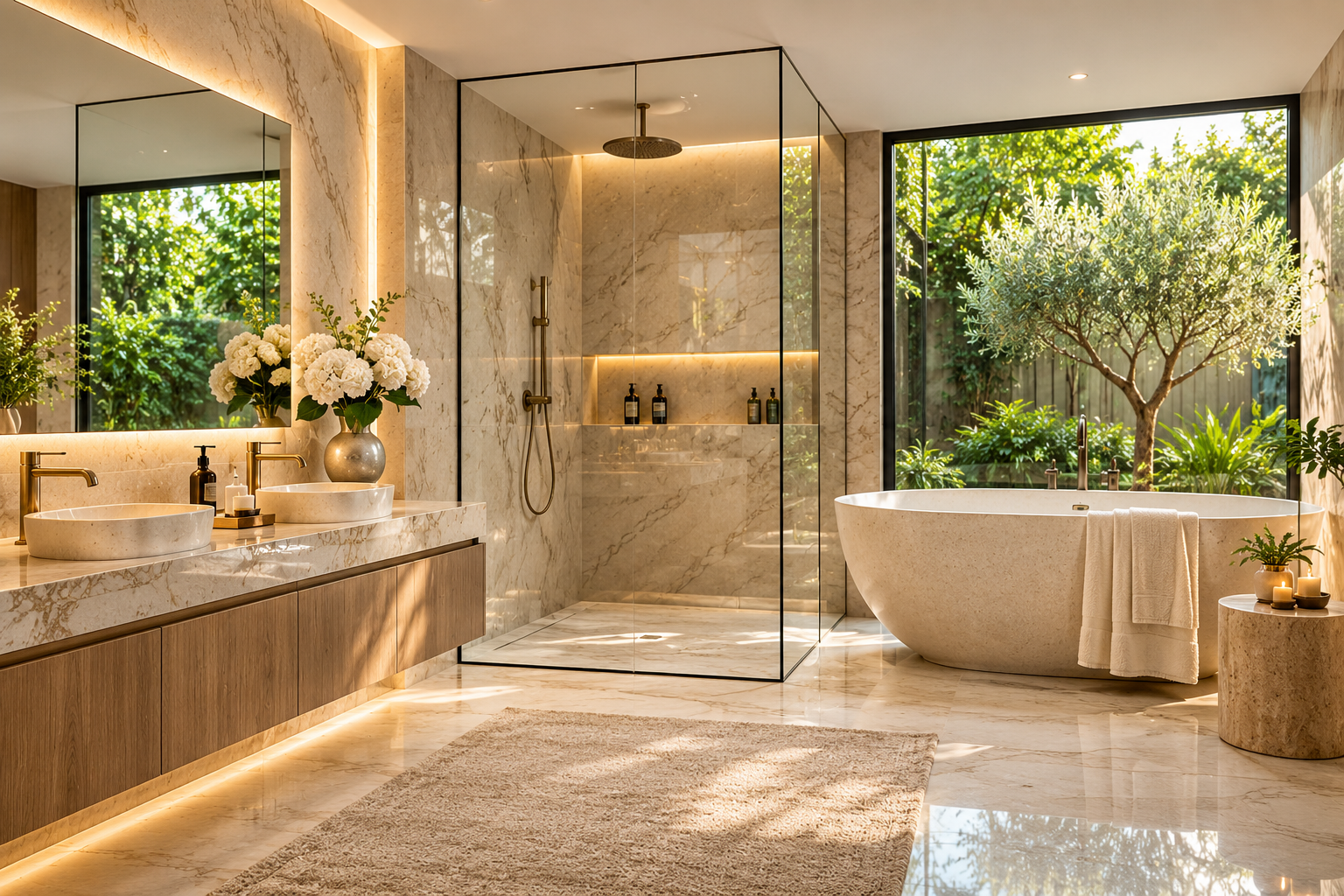
In a larger bathroom, a freestanding bathtub can become a visual feature, provided there is enough clearance around it for comfortable use and cleaning. In a smaller bathroom, a well-designed walk-in shower may be a more practical choice.
Pay attention to door swings, shower access, drawer openings, and the available standing space in front of the vanity. These details may seem minor, but they influence how comfortable the room feels every day.
A useful layout should also consider plumbing locations. Moving existing plumbing can increase renovation costs, so compare the visual benefits with the practical and financial implications before making major changes.
2. Choose Materials That Balance Beauty and Durability
Materials have a significant influence on the character of a luxury bathroom. Natural stone, porcelain, ceramic, glass, and carefully selected metals can all contribute to a sophisticated design.
Natural marble offers distinctive veining and an individual appearance. However, it is generally more porous than many manufactured surfaces and may require appropriate sealing, careful cleaning, and ongoing maintenance.
Travertine brings a softer, organic character with natural variation. Its suitability depends on the finish, treatment, installation, and maintenance requirements.
Porcelain tiles are available in a wide range of colours, patterns, and stone-inspired finishes. They are often selected for bathrooms because many porcelain products have low water absorption and are relatively easy to maintain. Always check the manufacturer’s specifications for the intended application.
When comparing surfaces, consider more than appearance. Ask about slip resistance, water absorption, stain resistance, cleaning instructions, and suitability for wet areas.
For a cohesive look, limit the number of dominant finishes. One main surface, one complementary material, and a restrained accent finish can create a more balanced result than several competing patterns.
Choosing the right materials is essential for creating a timeless interior. Read our guide to marble, travertine, and porcelain to understand their differences, finishes, and suitability for different areas of your home.
3. Design a Vanity That Combines Storage and Style
The vanity is often one of the most noticeable elements in a bathroom. It should provide sufficient storage while complementing the proportions and materials of the room.
A floating vanity can create a lighter visual effect by exposing part of the floor beneath it. It may also make floor cleaning easier, although the wall structure and installation must be suitable for supporting its weight.
A floor-standing vanity can offer a more substantial appearance and may provide additional storage. The right choice depends on the room’s layout and the amount of storage required.
Consider deep drawers for everyday items, smaller compartments for grooming products, and concealed spaces for less attractive essentials. Keeping frequently used objects organised helps maintain a calm countertop.
Countertop materials should be selected according to their resistance to water, stains, cosmetics, and cleaning products. The sink design should also be practical: check splash zones, tap placement, bowl depth, and available counter space.
Choose handles and taps that coordinate with the wider design rather than treating every fitting as an independent decorative feature.
4. Use Layered Lighting for Comfort and Atmosphere
Bathroom lighting should do more than make the room look attractive. It needs to support grooming, cleaning, bathing, and relaxation.
A useful lighting scheme generally includes three layers.
Ambient lighting provides overall illumination. Recessed ceiling lights or suitable flush-mounted fixtures can create an even base layer. Their placement should reduce dark areas without producing uncomfortable glare.
Task lighting is especially important around the vanity. Lights positioned thoughtfully beside or around the mirror can reduce harsh facial shadows and make everyday grooming easier.
Accent lighting adds visual depth. Concealed lighting beneath a floating vanity, within a suitable niche, or along an architectural detail can create a gentle evening atmosphere.
Light colour also matters. Warm or neutral-white lighting is often preferred for a relaxed residential bathroom, while the exact colour temperature should be chosen to suit the materials and personal preference.
Bathroom electrical fittings must be appropriate for their location and exposure to moisture. Follow local electrical regulations and use a qualified electrician, particularly for lights near showers, bathtubs, and other wet areas.
Thoughtful lighting choices can transform the atmosphere of every room in a home. Discover our complete guide to choosing lighting for a luxury home for practical ideas on ambient, task, and accent lighting.
5. Create a Well-Planned Walk-In Shower
A walk-in shower can give a bathroom a clean, contemporary appearance. Its success depends on proper planning rather than simply removing a shower door.
A frameless glass enclosure can help maintain visual openness. However, the glass must be correctly specified, securely installed, and supported by suitable hardware.
The shower floor needs an appropriate slope towards the drain so that water does not collect in unwanted areas. Waterproofing behind and beneath the finished surfaces is equally important. These elements should be planned and installed according to the relevant building standards.
A recessed shower niche can provide convenient storage for toiletries without introducing bulky shelves. Its position should be comfortable to reach, and its construction must include proper waterproofing.
Choose shower fittings according to water pressure, available space, and maintenance preferences. A rainfall showerhead can provide a distinctive experience, but it should not replace practical considerations such as water efficiency, spray control, and ease of cleaning.
6. Decide Whether a Bathtub Suits Your Space
A bathtub can become a beautiful feature in a spacious bathroom, but it should serve a genuine purpose.
Freestanding bathtubs are often used as sculptural focal points. They work particularly well when there is enough surrounding space to move comfortably, clean the floor, and access the fittings.
Built-in bathtubs can be a more space-efficient choice. They also allow the surrounding structure to incorporate storage, ledges, or coordinated wall finishes.
Before selecting a bathtub, check its dimensions, filled weight, installation requirements, water capacity, and access for future maintenance. The floor structure must be suitable for the combined weight of the tub, water, and occupants.
If a bathtub would make the room difficult to navigate or consume space needed for storage, a well-designed shower may be the better investment.
7. Select Flooring With Safety in Mind
Bathroom flooring must withstand regular water exposure while providing a comfortable and safe surface.
Porcelain and ceramic tiles are common choices because they are available in many sizes, finishes, and patterns. Natural stone can create a distinctive appearance but may need more careful maintenance depending on the type and finish.
Slip resistance deserves particular attention. A highly polished floor may look elegant, but it can become slippery when wet. Ask suppliers for the relevant slip-resistance information and choose a product suitable for the intended bathroom application.
Smaller tiles can provide more grout joints, which may help create traction in some installations. However, grout also requires cleaning and maintenance, so the overall surface should be considered as a complete system.
Use appropriate waterproofing beneath the finished floor, and make sure the installation includes suitable drainage and transitions between wet and dry areas.
8. Add Storage Without Making the Room Feel Cluttered
A luxury bathroom should be visually calm, but that does not mean it should lack practical storage.
Recessed cabinets, mirrored storage units, vanity drawers, and built-in shelving can help keep everyday products organised. The best storage solutions are planned around the actual items used in the room.
Keep frequently used products within easy reach. Store cleaning supplies and occasional-use items separately from everyday toiletries.
Open shelves can display neatly folded towels or a small selection of accessories, but too many exposed objects can make the bathroom feel busy. A combination of concealed storage and a few carefully chosen visible details usually creates a more balanced appearance.
Consider ventilation when planning enclosed storage. Bathrooms experience humidity, and poorly ventilated cabinets can develop moisture-related problems.
9. Choose Metal Finishes With Consistency
Taps, shower fittings, handles, towel rails, and accessories all contribute to the bathroom’s overall appearance.
Brushed nickel, chrome, brushed brass, bronze, and matte black are among the finishes commonly used in contemporary interiors. Each creates a different effect.
Chrome and polished finishes can introduce brightness, while brushed metals tend to have a softer appearance. Brass and bronze can bring warmth to neutral stone and wood-inspired finishes.
You do not need to use exactly the same finish on every element, but the combination should feel intentional. Repeating one dominant metal finish across the main fittings can help establish visual consistency.
Before purchasing, check the manufacturer’s cleaning instructions and finish durability. Some finishes require gentler cleaning products than others.
10. Use Colour and Texture to Create a Timeless Look
A restrained colour palette can help a bathroom feel composed and enduring.
Warm white, soft beige, stone grey, muted taupe, and natural wood tones work well in many contemporary spaces. These colours can be combined with textured surfaces to prevent the design from feeling flat.
For example, a smooth stone countertop can contrast with lightly textured wall tiles. Natural wood cabinetry can introduce warmth against pale porcelain surfaces, while brushed metal fittings add a subtle finishing detail.
If you prefer stronger colours, consider introducing them through a feature wall, accessories, or a carefully selected tile rather than using several competing statement finishes.
The aim is not to make every bathroom look identical. It is to create a combination of colour, texture, and proportion that feels appropriate to the architecture and comfortable to live with over time.
Natural wood can introduce warmth and texture into a refined interior. Read our guide to mixing wood tones in a luxury home to learn how different wood finishes can work together harmoniously.
11. Prioritise Ventilation and Long-Term Maintenance
Good ventilation is essential in a bathroom, regardless of how luxurious its finishes may be.
Hot showers create humidity, and insufficient ventilation can contribute to condensation, mould growth, peeling finishes, and deterioration of building materials.
Where natural ventilation is limited, an appropriately sized mechanical exhaust system may be necessary. Its capacity, duct routing, noise level, and installation should be considered during the planning stage.
Maintenance also varies by material. Natural stone may require sealing and specialised cleaning products, while porcelain surfaces are generally less demanding. Grout lines, shower screens, metal fittings, and drainage points all need regular care.
Before finalising a design, understand the cleaning and maintenance requirements of every major surface. A material that looks beautiful in a showroom should also be practical for the way the bathroom will be used.
12. Bring the Design Together With Thoughtful Details
The final details should support the bathroom’s overall design rather than compete for attention.
Well-proportioned mirrors, quality towel rails, neatly arranged accessories, soft towels, and a small amount of greenery can make the room feel finished.
Choose accessories that are suitable for humid conditions. Natural materials can be attractive, but untreated wood, delicate fabrics, and certain decorative objects may not be appropriate near frequent water exposure.
Keep the countertop relatively clear and allow the materials, lighting, and architectural details to remain the focus.
A successful luxury bathroom is not necessarily the one with the most expensive fittings. It is the one where the details work together to make the space comfortable, functional, and visually harmonious.
True luxury is often created through thoughtful details, balanced proportions, and carefully selected materials. Explore our guide to 10 elements that make a home look quietly luxurious for more inspiration on creating an elegant and cohesive home.
Final Thoughts
Designing a modern luxury bathroom requires a balance between appearance, performance, and everyday comfort. A thoughtful layout, durable materials, suitable lighting, effective storage, and reliable waterproofing all contribute to a space that works as beautifully as it looks.
Rather than following every passing trend, focus on the features that will remain useful over time. Choose materials you can maintain, fittings that suit your needs, and finishes that complement the character of your home.
True luxury is found in the quality of the decisions behind the design: a bathroom that feels calm, functions effortlessly, and continues to serve its owners well for years.