Marble vs. Travertine vs. Porcelain: Which Material Is Best for Your Home?
Marble vs. Travertine vs. Porcelain: Which Material Is Best for Your Home?
Choosing the right surface material can change how a room looks, feels, and performs over time. Marble brings distinctive veining and a timeless character. Travertine offers warm, earthy tones and a naturally textured appearance. Porcelain provides a broad range of designs with practical options for busy households.
But the most beautiful material is not automatically the best choice for every room. A kitchen countertop faces different demands from a decorative fireplace surround, while a bathroom floor needs different performance characteristics from a living-room feature wall.
At Casa Élite, we believe thoughtful luxury begins with choosing materials that suit both the design and the way a home is used. This guide compares marble, travertine, and porcelain so you can make a more informed decision.
Understanding the Three Materials
Marble: Natural Veining and Individual Character
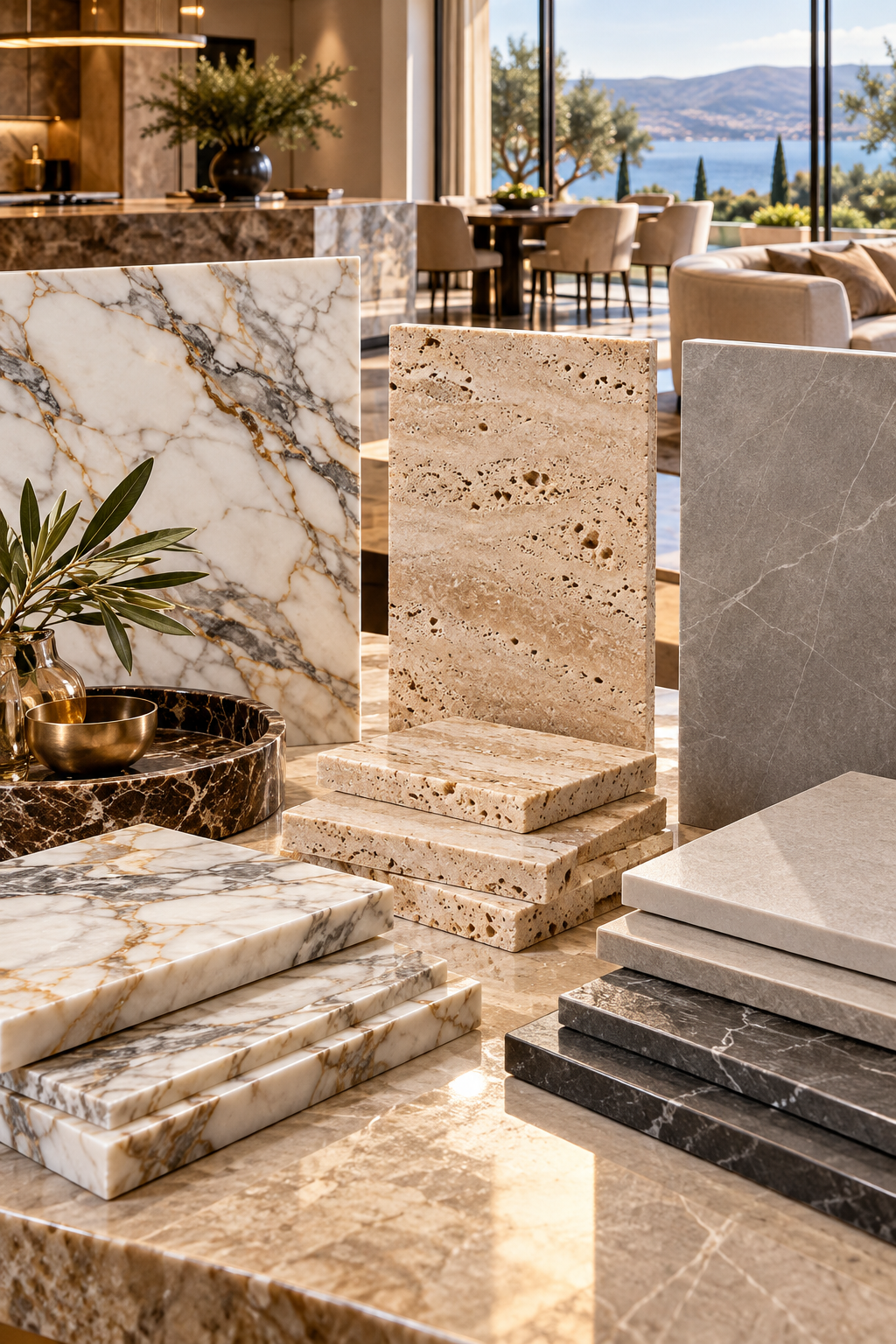
Marble is a natural stone known for its distinctive veining, subtle color variations, and polished or honed finishes. Depending on the variety, it can appear bright and understated, dramatically veined, or richly colored.
Because marble is calcium-carbonate-based, it can react with mild acids. Lemon juice, vinegar, and some acidic cleaners may dull the surface, creating marks known as etching. Marble can also stain or scratch, depending on the stone, finish, and conditions of use.
Best suited to: feature walls, fireplace surrounds, selected bathroom applications, decorative furniture, and carefully maintained countertops.
Think about before choosing it: Marble is not a maintenance-free surface. Ask the supplier about the specific stone, recommended sealer, cleaning requirements, and suitability for your intended use.
Travertine: Warmth, Texture, and Natural Variation
Travertine is a type of limestone formed through mineral deposits, often recognized by its warm beige, cream, ivory, and soft brown tones. Its natural pores and subtle movement create an organic appearance that works particularly well in Mediterranean, contemporary, and relaxed luxury interiors.
Travertine may be supplied with its pores filled or left open, depending on the product and finish. These differences affect its appearance and maintenance. Like marble, travertine is calcium-carbonate-based and is vulnerable to acidic substances.
Best suited to: selected flooring, feature walls, fireplace surrounds, and other applications where a natural, textured look is desired.
Think about before choosing it: Travertine is not identical from one product to another. Porosity, finish, installation location, and maintenance requirements matter. Confirm whether a particular variety is suitable for wet areas or countertops before purchasing.
Porcelain: Versatility and Practical Performance
Porcelain tile is a manufactured ceramic product available in many colors, patterns, sizes, and finishes. Some designs imitate marble or travertine, while others resemble concrete, limestone, or wood.
Under the North American tile standard, porcelain tile has a water absorption rate of 0.5% or less. That low absorption can make it a useful option in many residential applications, although performance still depends on the specific tile, finish, installation, and intended use.
Porcelain is not completely maintenance-free. Grout joints require care, some finishes may show marks more readily than others, and polished surfaces can behave differently from textured ones.
Best suited to: many flooring applications, kitchen backsplashes, bathrooms, and selected countertop or wall applications when the product is specifically designed and rated for that purpose.
Think about before choosing it: Check the manufacturer’s technical specifications, slip-resistance information where relevant, installation requirements, and recommended cleaning products.
Marble vs. Travertine vs. Porcelain: Quick Comparison
Feature| Marble| Travertine| Porcelain
Appearance| Distinctive natural veining| Warm, earthy variation| Natural-look patterns or contemporary designs
Material type| Natural stone| Natural limestone| Manufactured ceramic tile
Acid sensitivity| Vulnerable| Vulnerable| Generally resistant to household acids, depending on the product
Water absorption| Varies by stone| Varies by stone| Porcelain tile is defined by absorption of 0.5% or less under the applicable standard
Maintenance| Often requires careful cleaning and possibly sealing| Depends on porosity, finish, and treatment| Usually straightforward, but depends on finish and grout
Design character| Classic and expressive| Organic and relaxed| Highly versatile
Main consideration| Etching, staining, and scratching| Porosity, finish, and acid sensitivity| Product specifications, finish, grout, and installation
This comparison is a starting point, not a guarantee of performance. Natural stone varieties differ, and porcelain products are not all identical. Always confirm the technical details of the specific product you intend to buy.
Which Material Works Best in a Kitchen?
Kitchen surfaces experience spills, food preparation, frequent cleaning, and everyday contact with utensils and cookware.
Marble can create an exceptional visual statement, especially on an island or backsplash. However, acidic ingredients may etch its surface, and some spills can stain it. If you appreciate the natural patina that develops with use and are comfortable with careful maintenance, marble may still be worth considering.
Travertine can bring warmth to a kitchen, particularly on selected walls or flooring. Its suitability for countertops depends on the specific stone, finish, treatment, and expected use. Obtain professional advice before choosing it for a heavily used preparation surface.
Porcelain can be a practical option for many kitchen floors and backsplashes. Certain porcelain slabs are also designed for countertops, but not every porcelain tile is suitable for that purpose. Confirm the product’s intended application and fabrication requirements.
A practical decision: For a busy kitchen where straightforward routine care matters, consider a properly rated porcelain product. Choose marble or travertine when their natural character is a priority and you understand the care involved.
Which Material Is Better for Bathrooms?
Bathroom selection involves more than appearance. Water exposure, soap residue, cleaning products, underfoot safety, and installation quality all matter.
Marble can create a refined bathroom, from vanity surfaces to selected wall applications. However, water exposure and unsuitable cleaners can affect some stones and finishes. The installation and maintenance plan should be appropriate for the exact product.
Travertine can introduce a warm, spa-like atmosphere. Before using it on a shower floor or another regularly wet surface, check its finish, porosity, maintenance requirements, and suitability for that specific application.
Porcelain is available in many bathroom-friendly formats. For floors and showers, check the manufacturer’s wet-area recommendations and slip-resistance information. A low water-absorption rate alone does not guarantee that a tile is safe underfoot.
A practical decision: Compare the complete installed system, including the tile or stone, waterproofing, grout, drainage, and surface finish. Do not select a bathroom material based on a photograph alone.
Which Material Is Best for Living-Room Floors?
Living rooms often offer more flexibility because they typically experience less direct water exposure than kitchens and showers.
Marble flooring can provide strong natural variation and a formal, elegant appearance. It may be particularly appealing in spaces where the veining and finish are part of the overall design.
Travertine can make a living room feel grounded and warm. Its natural color variation works well with timber, linen, textured fabrics, and muted palettes.
Porcelain can suit a range of interiors, from minimal contemporary spaces to rooms inspired by natural stone. It is also available in formats that help create a more continuous visual effect, provided the layout and installation are planned carefully.
Before deciding, compare samples in the actual room. Daylight, artificial lighting, grout color, tile size, and finish can change the final result considerably.
Maintenance: What Will Daily Care Actually Involve?
Maintenance is one of the most important differences between these materials.
For marble and travertine, use a cleaner recommended for the specific natural stone. Avoid assuming that a household cleaner is safe simply because it is described as gentle. Acidic products can damage calcium-carbonate-based stones.
Sealing may be recommended for some natural stone applications, but a sealer does not make every stone stain-proof or acid-proof. Ask the supplier whether the selected stone needs sealing, which product is suitable, and how often its condition should be reviewed.
For porcelain, follow the manufacturer’s cleaning guidance. Routine care may be simpler for many products, but grout, surface texture, and finish can influence how easily the installation stays clean.
A useful habit for any material is to keep the product specifications and care instructions supplied at purchase. These details are more reliable than a generic maintenance schedule for an entire material category.
How Much Should You Budget?
There is no universal price ranking that applies to every marble, travertine, and porcelain product.
Cost depends on the exact variety or design, thickness, format, finish, availability, fabrication, shipping, installation complexity, and local labor rates. Natural stone may also require additional fabrication or finishing. Large-format porcelain slabs can require specialized handling and installation.
Instead of comparing only the price per square foot, request an itemized estimate covering:
- Material and expected waste.
- Cutting, edge finishing, and fabrication.
- Substrate preparation and installation.
- Adhesives, grout, and any recommended sealer.
- Delivery, handling, and specialist labor.
- Long-term cleaning and maintenance needs.
This gives you a more realistic comparison of the total installed cost. If you are comparing quotes, make sure each one covers the same scope of work and a comparable quality of finish.
Common Mistakes to Avoid
Choosing from a small sample alone. Natural stone varies, and manufactured patterns also look different across large surfaces. View several pieces or a larger sample where possible.
Ignoring the finish. Polished, honed, brushed, and textured surfaces can differ in appearance, cleaning requirements, and underfoot behavior.
Assuming sealing solves every problem. Sealers can help with certain types of absorption, but they do not eliminate acid etching or make every surface stain-proof.
Using the wrong cleaner. Follow the manufacturer’s instructions, especially for natural stone.
Overlooking installation. Correct substrate preparation, waterproofing where required, suitable setting materials, grout selection, and professional installation can be as important as the surface material itself.
Buying without checking specifications. Confirm that the exact product is suitable for the intended location, particularly for showers, exterior areas, countertops, and other demanding applications.
A Simple Way to Make Your Final Choice
Use these questions to narrow your options:
- Do you want distinctive natural veining, warm organic texture, or a manufactured design with consistent styling?
- Are you comfortable with the maintenance requirements of natural stone?
- Will the material be used on a floor, wall, countertop, or regularly wet surface?
- What do the manufacturer’s technical specifications say about the intended application?
- Does the total installed quote fit your budget?
- Have you reviewed physical samples under the lighting in your home?
If natural variation is central to your vision, marble or travertine may be the right direction. If product versatility and routine practicality are higher priorities, porcelain deserves close consideration. Neither choice is universally superior; the best option is the one that suits the space, the household, and the level of care you are willing to provide.
The Casa Élite Perspective
Exceptional interiors are not created by choosing the most expensive material in a showroom. They come from understanding how a material looks, feels, performs, and ages within a particular space.
Marble offers expressive natural character. Travertine brings warmth and organic texture. Porcelain provides a broad range of design possibilities with product-specific performance advantages.
Before making a final selection, compare real samples, review technical specifications, and speak with a qualified installer about the demands of your project. A thoughtful material choice can support a beautiful interior while making everyday living more comfortable and manageable.
The goal is not simply to choose a surface that looks luxurious today. It is to choose one that continues to make sense for your home over time.