
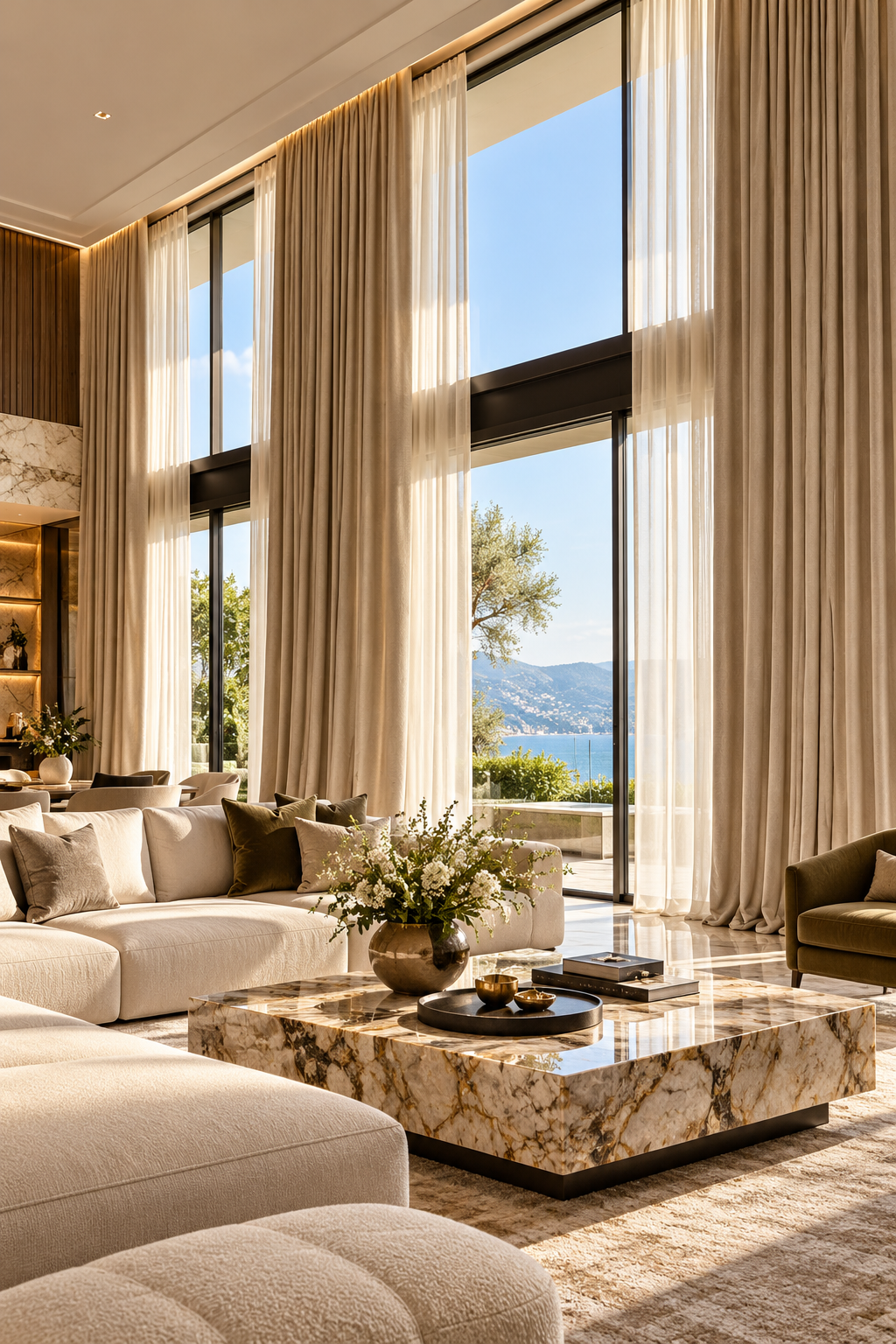
How to Choose Curtains for a Luxury Home: Fabric, Length, Lining, and Light
Choosing curtains for a luxury home involves more than selecting a beautiful fabric. The right window treatments influence natural light, privacy, room proportions, comfort, and the overall atmosphere of an interior.
In a thoughtfully designed space, curtains complement the architecture rather than compete with it. Fabric texture, curtain length, lining, hardware, and installation all contribute to a polished result.
Whether you are furnishing a contemporary living room, a serene bedroom, or a formal dining area, understanding these details can help you make choices that look elegant and work well in everyday life.
This guide explains how to choose curtains for a luxury home, including fabric selection, accurate measurements, lining options, hardware, and common mistakes to avoid.
Choose a Fabric That Suits the Room
Fabric determines how curtains hang, filter light, and contribute to a room’s character. For a luxurious appearance, prioritize material quality, texture, and suitability for the space instead of choosing a fabric based on appearance alone.
Linen and linen blends create a relaxed, natural look that works especially well in contemporary and transitional interiors. Their subtle texture adds depth without making a room feel overly decorated. Some linen fabrics wrinkle naturally, so consider whether you prefer a relaxed finish or a more structured appearance.
Velvet provides a richer, heavier appearance and can suit formal living rooms or bedrooms where greater light control is desirable. Its weight and color can make a strong visual statement, so balance it with the room’s existing finishes.
Cotton and cotton blends offer versatility and can work across many interior styles. Their appearance depends on the weave, weight, and finishing.
Sheer fabrics soften daylight while preserving a brighter, more open atmosphere. They are particularly useful in living areas where privacy needs are limited during the day.
Before buying, request fabric samples and view them in your room at different times of day. Colors and textures can look noticeably different under natural and artificial lighting.
Get the Curtain Length Right
Curtain length affects the perceived proportions of a room. Even an expensive fabric can look poorly fitted when the panels are too short or the hem is uneven.
For a tailored appearance, measure from the planned curtain rod or track to the intended finished hem. Do not measure only from the window frame, because the hardware position changes the final length.
Three common styles are worth considering:
- Just above the floor: Creates a clean, practical finish and is useful in rooms where easy cleaning matters.
- Lightly touching the floor: Offers a tailored appearance when the floor is level and measurements are accurate.
- A deliberate fabric break or puddle: Leaves extra fabric resting on the floor for a softer, more traditional effect. It requires more maintenance and is generally less practical in high-traffic areas.
For most contemporary luxury interiors, a neat floor-length finish is a versatile choice. Reserve longer puddled curtains for spaces where the styling is intentional and the extra fabric will not create a tripping or cleaning problem.
Consider Mounting Curtains Higher and Wider
Curtain placement can influence how large a window and room appear. Mounting a rod or track above the window frame may draw the eye upward, while extending it beyond the frame can allow more of the glass to remain uncovered when the curtains are open.
However, the ideal position depends on the architecture. Ceiling height, crown molding, window trim, nearby walls, and the location of other fixtures all affect what is possible.
Before drilling, check for hidden wiring or pipes and ensure the hardware can be securely fixed to a suitable support. Heavy curtains may require stronger fixings or professional installation.
Measure the available wall space on both sides of the window. The goal is to achieve balanced proportions without obstructing doors, cabinetry, radiators, or other features.
Select the Right Lining
Lining changes how curtains perform and how they look from inside the room. It can affect light control, privacy, insulation, fabric protection, and the way the panels hang.
Unlined curtains allow more light through the fabric and can create a light, informal appearance. They may be suitable for decorative panels or spaces where privacy and light control are not major concerns.
Standard lining can help create a fuller appearance, protect some face fabrics from direct sunlight, and improve opacity. The result depends on the materials used.
Blackout lining is designed to block much of the incoming light when properly installed, making it useful in bedrooms, media rooms, and other spaces where darkness is desirable. Light may still enter around the edges, depending on the installation.
Thermal or insulated lining may help reduce heat transfer through a window, but the benefit depends on the fabric system, fit, window construction, and surrounding conditions.
Choose the lining based on the room’s purpose. A bedroom may benefit from stronger light control, while a living room may need only moderate privacy and filtered daylight.
Match the Color to the Interior
Curtains do not need to match the wall color exactly. A considered relationship between curtains, walls, upholstery, flooring, and architectural details often creates a more sophisticated result.
Neutral shades such as warm white, ivory, oatmeal, taupe, and soft gray are versatile choices. They can complement natural stone, timber, metal finishes, and a wide range of furnishings.
For a quieter appearance, choose a curtain color close to the wall color but with a subtle difference in warmth or texture. This can help the room feel cohesive without appearing flat.
For a stronger design statement, consider a deeper tone that relates to an existing element, such as an upholstered chair, artwork, or rug. Repeating a color thoughtfully can make the design feel intentional.
Choose Hardware That Supports the Design
Always check fabric samples against the actual wall paint and flooring. A beige fabric can appear pink, yellow, or gray depending on the light and nearby colors.
Curtain rods, tracks, rings, brackets, and finials are functional elements, but they also affect the finished appearance.
Slim metal rods can suit contemporary spaces, while discreet ceiling-mounted tracks can create a clean line with minimal visible hardware. Traditional rooms may call for more decorative rods or finials.
The hardware must support the weight of the fabric and lining. Wide windows, heavy velvet, and layered treatments may require additional brackets or a more substantial track.
Consider how the curtains will open and close. A beautiful installation is less successful if the panels snag, the track bends, or the fabric is difficult to move.
Where possible, select hardware after confirming the curtain fabric, finished length, panel fullness, and mounting location. This helps avoid mismatched components and unnecessary expense.
Understand Fullness and Panel Width
Curtains need enough fabric to form folds when closed. If the panels are too narrow, they can look stretched and may not cover the window properly.
The amount of fullness depends on the fabric, heading style, track system, and desired appearance. Sheer curtains often benefit from more fullness than a structured treatment, while some modern styles are designed to look relatively flat.
Start by measuring the width of the track or rod, not just the glass. Then check the curtain maker’s recommended fullness for the selected heading and fabric.
If the curtains will frequently be drawn, allow enough fabric to cover the intended area while leaving room for the panels to stack at the sides. Ask the supplier to explain the finished coverage and stack-back space before ordering.
Layer Sheers and Heavier Curtains When Needed
Layering can provide more control over light and privacy throughout the day. A sheer layer softens daylight, while a heavier outer curtain can provide greater privacy and light reduction when closed.
This approach works particularly well in living rooms and bedrooms with large windows. It also offers flexibility when daylight changes during the day.
A double track or double rod is often required. Confirm that there is enough clearance for both layers to move freely and that the hardware can support their combined weight.
Layering is not essential for every room. In a small space or an interior with limited wall clearance, a single well-chosen curtain may look cleaner and be easier to operate.
Think About Privacy, Sunlight, and Daily Use
The best curtain is one that works for the people using the room, not simply one that looks good in photographs.
A street-facing living room may need more privacy than a room overlooking a private garden. A bedroom may require stronger light control, while a home office may benefit from reducing glare on screens without making the space unnecessarily dark.
Direct sunlight can also affect fabrics, furniture, artwork, and flooring over time. Lining and suitable window treatments can help, but performance varies with orientation, glazing, fabric, and installation.
For bathrooms or rooms with high humidity, check that the selected fabric and hardware are suitable for the environment. Keep fabric away from heat sources unless the installation has been assessed for safety.
If you are unsure, discuss your window orientation and intended use with a qualified window-treatment professional before ordering custom curtains.
Avoid These Common Curtain Mistakes
Measuring only the window glass. The hardware position and the amount of wall available affect both finished length and coverage.
Choosing fabric from a photograph alone. Color, texture, and opacity can look different in person and under different lighting.
Ignoring the stack-back space. Curtains may cover part of the glass even when fully open if there is not enough room at the sides.
Using insufficient hardware support. Heavy panels need suitable tracks, brackets, and fixings.
Selecting blackout curtains when filtered light is preferred. Consider the room’s purpose before choosing the lining.
Assuming expensive fabric guarantees a polished finish. Accurate measurements, appropriate fullness, careful hemming, and secure installation are equally important.
Forgetting cleaning requirements. Check the care label before buying, especially for delicate fabrics or custom-made treatments.
A Practical Checklist Before You Order
Before placing an order, confirm the following:
- The rod or track position and the finished curtain length.
- The total track width and required panel fullness.
- The fabric’s color, texture, weight, and care instructions.
- The lining needed for privacy and light control.
- The hardware’s load capacity and installation requirements.
- The available stack-back space when the curtains are open.
- The complete cost, including measuring, making, hardware, installation, and any additional lining.
For custom curtains, request a written specification showing the finished dimensions, fabric, lining, heading style, and installation details. Review the specification before approving production.
The Casa Élite Perspective
Luxury window treatments are defined by thoughtful decisions rather than unnecessary decoration. The right fabric, accurate proportions, appropriate lining, and well-chosen hardware can help a room feel calm, cohesive, and complete.
Begin with the needs of the space: how much light you want, how much privacy you require, and how the curtains will be used each day. Then choose materials and finishes that complement the architecture and the rest of the interior.
When the practical details are resolved, the result can feel effortless. Beautiful curtains should not only frame a window well; they should make the room more comfortable to live in.