The Luxury of a Well-Designed Entryway: Creating a Beautiful and Functional First Impression
An entryway is often the first part of a home that residents and guests experience, yet it is sometimes treated as little more than a passage between the front door and the main living spaces.
A well-designed entryway has a more important role. It manages everyday movement, provides a place for essential belongings, and establishes the visual tone for the rest of the home. When planned carefully, it can feel welcoming, organised, and quietly luxurious without relying on excessive decoration.
The most successful entryways balance appearance with practical needs. Materials must withstand regular use, lighting should support both safety and atmosphere, and furniture should fit the available space without restricting circulation.
This guide explores the key elements that can help create an entryway that makes a refined first impression while remaining comfortable for everyday life.
1. Start With Proportion and Circulation
Before choosing a console table or decorative accessories, consider how people move through the entrance.
The route from the front door into the home should remain clear and comfortable. Door swings, nearby storage, furniture depth, and the movement of several people entering at once can all affect how the space functions.
In a compact entryway, a shallow console or wall-mounted storage may be more suitable than a large freestanding piece. In a generous foyer, furniture can help define zones and create a sense of scale.
Try to avoid filling every available wall with furniture. Open space is valuable in an entrance because it makes movement easier and allows the architecture to remain visible.
A well-proportioned entryway should feel intentional rather than empty, and welcoming rather than crowded.
2. Choose Flooring That Can Handle Everyday Use
Entryway flooring experiences more wear than many other areas of the home. Shoes, moisture, dust, and outdoor debris can affect both the appearance and long-term performance of the surface.
Natural stone can create a timeless and substantial impression, while porcelain offers a wide range of durable finishes, including stone-inspired designs. Engineered materials may also be suitable depending on the specific product and installation requirements.
When selecting flooring, consider:
- Slip resistance.
- Ease of cleaning.
- Resistance to moisture and staining.
- Durability under regular foot traffic.
- Compatibility with the home’s wider design.
A beautiful material should also be practical for the local climate and the way the entrance is used.
For example, a highly polished surface may require more careful consideration in an area that frequently becomes wet.
The right flooring material can also influence the overall character and maintenance of a home. Explore our guide to marble, travertine, and porcelain to understand how these popular surfaces compare.
3. Create a Layered Lighting Scheme
Entryways often need different types of lighting at different times of day.
A ceiling fixture may provide general illumination, while wall lights or architectural lighting can add warmth and visual depth. Accent lighting can also highlight artwork, textured walls, or other selected features.
A layered approach can include:
Ambient lighting: Provides comfortable overall illumination.
Task lighting: Helps with practical activities such as finding keys, checking belongings, or navigating the space.
Accent lighting: Adds emphasis to architectural details or carefully chosen decorative elements.
The scale of decorative fixtures should suit the height and proportions of the space. A dramatic pendant may work beautifully in a double-height foyer but overwhelm a low-ceilinged entrance.
Consider how the entryway looks during both daylight and evening hours. Lighting should support a welcoming atmosphere without creating excessive glare.
Thoughtful lighting can shape the atmosphere of every part of a home. Discover our complete guide to choosing lighting for a luxury home for more ideas on combining ambient, task, and accent lighting.
4. Select Furniture With a Clear Purpose
Every furniture piece in an entryway should earn its place.
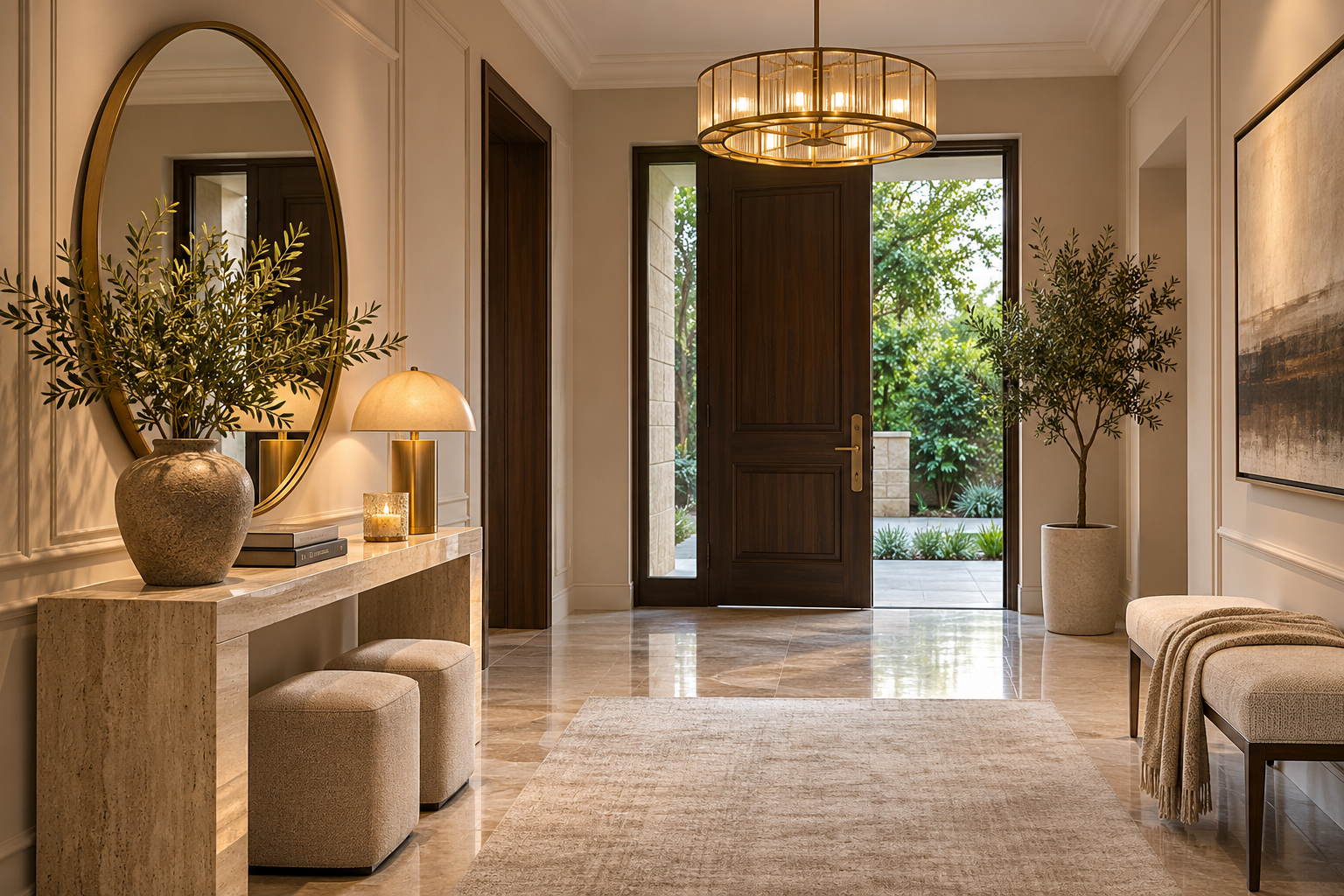
A console table can provide a surface for keys and a small lamp. A bench may offer a convenient place to sit while putting on shoes. A narrow cabinet can conceal everyday items that would otherwise create visual clutter.
Choose furniture according to the available space rather than selecting pieces solely because they look attractive in isolation.
Pay attention to depth, height, and clearance around doors. A beautiful console that blocks circulation will quickly become impractical.
For a more refined appearance, select fewer, better-proportioned pieces rather than filling the space with multiple small furniture items.
5. Use Mirrors to Add Light and Visual Depth
Mirrors can be particularly useful in an entryway because they reflect both natural and artificial light.
A large mirror above a console can create a stronger sense of depth, while a full-height mirror may be practical near the front door.
The frame should complement the home’s wider material palette. A warm wood frame, restrained metal finish, or simple architectural edge can each create a different effect.
Consider what the mirror reflects. Ideally, it should enhance a view, light source, or attractive part of the interior rather than doubling visual clutter.
Placement is also important. The mirror should be positioned securely and at a practical height for everyday use.
6. Add Architectural Detail Without Overdecorating
An entryway does not need an excessive number of decorative objects to feel special.
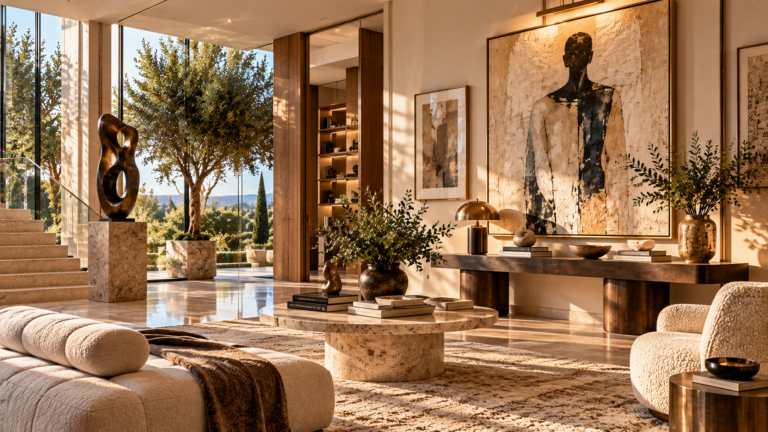
Architectural details can create interest more quietly. Panelled walls, textured plaster, natural stone, timber joinery, or carefully proportioned mouldings can add depth while allowing the space to remain visually calm.
The key is to create a clear hierarchy.
Choose one or two main design elements and allow them to become the focus. If every wall, floor, and furniture piece demands attention, the entryway may begin to feel busy.
Subtle material changes and carefully considered craftsmanship can often create a stronger impression than a large collection of decorative accessories.
7. Plan Storage Before Clutter Becomes a Problem
An organised entryway is easier to maintain and more pleasant to use.
Consider the items that regularly arrive at the door: shoes, bags, coats, umbrellas, keys, and deliveries. Planning storage around these habits can prevent everyday belongings from accumulating on visible surfaces.
Concealed storage can help maintain a clean appearance. Built-in cabinets may be useful in larger entrances, while wall hooks, narrow cupboards, or integrated benches can work in smaller spaces.
A practical entryway does not need to hide everything. A few accessible items can remain visible if they are arranged intentionally.
The goal is to create enough storage for real life without turning the entrance into a utility room.
8. Create a Consistent Material Palette
An entryway should introduce the design language of the rest of the home.
This does not require every room to use identical materials. Instead, repeat selected colours, textures, or finishes to create a sense of continuity.
For example, a warm timber tone used in the entrance might reappear in a living room cabinet. A metal finish used on the front door hardware could be repeated in interior lighting.
A restrained palette also helps prevent the entrance from feeling visually disconnected from adjacent rooms.
Before adding another finish, consider whether it supports the overall composition or simply introduces unnecessary variety.
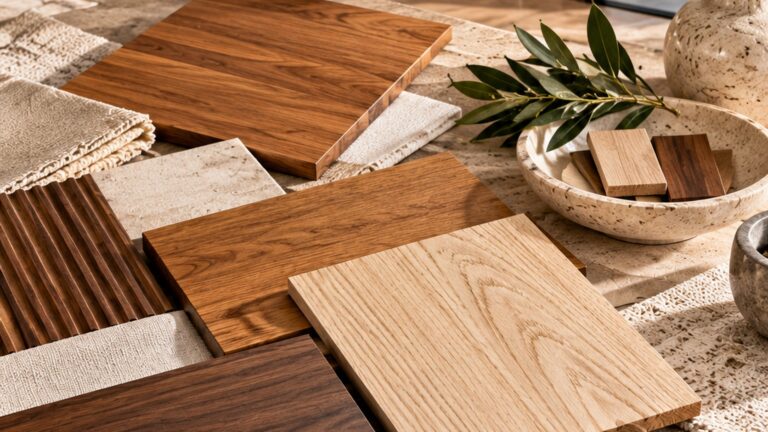
A carefully coordinated combination of finishes can make an interior feel more refined and cohesive. Learn more about mixing wood tones in a luxury home and creating harmony between different natural finishes.
9. Consider Everyday Comfort and Safety
Luxury design should support everyday use.
A bench can make it easier to put on shoes. Good lighting can improve visibility. A durable mat or recessed entrance zone can help manage moisture and dirt.
If the entryway includes steps or changes in floor level, these should be clearly visible and appropriately lit.
Consider the needs of everyone who uses the home, including children, older visitors, and guests carrying bags.
Electrical fittings, wall-mounted furniture, mirrors, and decorative fixtures should be securely installed. Flooring should be selected with appropriate slip resistance for the intended environment.
These practical considerations may not be the most visually dramatic aspects of the design, but they contribute significantly to a comfortable and well-functioning entrance.
10. Make the First Impression Feel Personal
The final layer of an entryway should reflect the character of the home and the people who live there.
This does not mean displaying every decorative object or filling every surface.
A carefully selected artwork, sculptural object, family photograph, or arrangement of natural branches can add personality without creating clutter.
Choose details that feel meaningful and visually appropriate to the space.
A calm entryway with one memorable element often makes a stronger impression than a room filled with unrelated accessories.
Common Entryway Design Mistakes to Avoid
A beautiful entrance can become less effective when practical details are overlooked.
Choosing furniture that is too deep: This can restrict movement and make the entrance feel crowded.
Using too little storage: Everyday items quickly accumulate when they do not have a designated place.
Ignoring lighting: A single overhead fixture may not provide the atmosphere or practical illumination the space needs.
Selecting delicate flooring: The entrance is a high-use area and materials should suit the expected level of wear.
Overdecorating: Too many accessories can make even a large foyer feel visually busy.
Forgetting the wider home: An entryway should feel connected to the design language of the rooms beyond it.
Final Thoughts
A well-designed entryway is a combination of thoughtful planning and carefully edited details.
Clear circulation, durable flooring, layered lighting, practical storage, and a cohesive material palette can create a space that feels both elegant and easy to live with.
The goal is not simply to create an impressive entrance for visitors. A successful entryway should also make everyday arrivals and departures more comfortable.
True luxury is often felt in spaces that function effortlessly. When an entryway is designed around both practical needs and visual harmony, it can create a lasting first impression while setting a calm, refined tone for the entire home.
A refined first impression is often created through simplicity, thoughtful materials, and carefully considered details. Explore 10 elements that make a home look quietly luxurious for more ideas on creating an elegant and timeless home.