How to Choose Lighting for a Luxury Home: A Complete Room-by-Room Guide
Lighting is one of the most influential elements in luxury home design. It can make a room feel warm and welcoming, emphasize architectural details, bring out the beauty of natural materials, and create a sense of depth that furniture alone cannot achieve.
Yet beautiful lighting is not simply about choosing an impressive chandelier or an expensive designer lamp. The most successful interiors combine several types of illumination, carefully selected fixtures, appropriate light levels, and thoughtful placement.
Whether you are designing a new home or updating an existing interior, understanding how lighting works can help you create rooms that feel elegant, comfortable, and practical throughout the day.
In this guide, we explore how to choose lighting for a luxury home, from living rooms and bedrooms to kitchens, bathrooms, hallways, and outdoor spaces.
1. Understand the Three Layers of Luxury Lighting
A well-designed lighting scheme usually combines three complementary layers: ambient, task, and accent lighting. Each serves a different purpose, and together they create a balanced, adaptable environment.
Ambient Lighting: The Foundation
Ambient lighting provides the general illumination needed to move comfortably through a room. It establishes the overall brightness and helps a space feel cohesive.
Common examples include:
- Recessed ceiling lights.
- Flush-mount and semi-flush-mount fixtures.
- Chandeliers and ceiling pendants.
- Cove lighting and concealed architectural illumination.
- Indirect light reflected from ceilings or walls.
In a luxury interior, ambient lighting should feel intentional rather than overwhelming. A large room may need several carefully positioned light sources instead of a single powerful ceiling fixture.
Recessed lights can provide discreet illumination, while a chandelier or sculptural pendant introduces a decorative focal point. In rooms with architectural coves, concealed LED lighting can create a soft wash of light across the ceiling.
The goal is to illuminate the room comfortably without making every surface equally bright.
Task Lighting: Light Where You Need It
Task lighting supports activities that require focused illumination.
Examples include:
- Table lamps beside a sofa or reading chair.
- Pendant lights above a kitchen island.
- Under-cabinet lighting for food preparation.
- Desk lamps in a home office.
- Reading lights beside a bed.
- Vanity lighting around a bathroom mirror.
The position of task lighting matters as much as the fixture itself. A reading lamp should illuminate the book without shining directly into the reader’s eyes. Kitchen task lighting should illuminate the work surface without casting distracting shadows.
When choosing task lighting, consider the activity, the height of the fixture, the direction of the beam, and the position of nearby furniture.
Accent Lighting: Highlight What Matters
Accent lighting draws attention to selected features and gives a room visual depth.
It can emphasize:
- Artwork and sculptures.
- Textured stone walls.
- Architectural niches.
- Bookshelves and display cabinets.
- Decorative objects.
- Interesting ceiling details.
Picture a living room with warm ambient illumination, a floor lamp beside an armchair, and a discreet spotlight highlighting a piece of artwork. Each light source contributes something different, making the room feel more considered.
Accent lighting should support the overall design rather than compete with it. A few carefully selected focal points are often more effective than illuminating every decorative object.
2. Choose the Right Color Temperature
Light color has a significant influence on how a luxury interior feels. Some lighting appears warm and golden, while other sources look neutral or cool.
Color temperature is measured in kelvins (K). Understanding the basic ranges can help you choose lighting that complements your materials, furnishings, and preferred atmosphere.
| Color temperature | Typical appearance | Common applications |
|---|---|---|
| 2700K | Warm, soft white | Living rooms, bedrooms, ambient lighting |
| 3000K | Warm white with a slightly cleaner appearance | Kitchens, bathrooms, hallways, general residential lighting |
| 3500K–4000K | Neutral to cooler white | Utility areas, workspaces, selected contemporary interiors |
These ranges are general starting points, not strict rules. The best choice depends on the fixture, the room, the finishes, and the amount of daylight available.
For many warm, sophisticated residential interiors, 2700K to 3000K creates a comfortable starting point. It can complement natural wood, warm metals, creamy upholstery, and beige or taupe finishes.
However, consistency matters. If neighboring lights have noticeably different color temperatures, the room may feel visually disjointed.
Before purchasing multiple fixtures, test the intended bulbs together in the actual space. Paint colors, stone, wood, and fabrics can look surprisingly different under different lighting conditions.
3. Consider Brightness, Not Just Bulb Wattage
Wattage measures the electrical power a bulb consumes, not the amount of light it produces.
For brightness, look at lumens. A higher lumen rating generally indicates greater light output, although the result also depends on fixture design, beam direction, shade material, and room surfaces.
A useful approach is to consider the purpose of each light source rather than choosing the brightest available bulb.
For example, a kitchen work surface may need stronger, focused illumination than a bedside table. A living room used for entertaining may need a brighter general setting than the same room used for watching a movie in the evening.
Several factors influence the appropriate brightness:
- Room dimensions and ceiling height.
- Wall and ceiling colors.
- Natural daylight.
- The activities performed in the room.
- The number and placement of light sources.
- The amount of light absorbed or blocked by shades and materials.
Dimmable fixtures can make a lighting scheme more adaptable. They allow you to change the atmosphere without changing the entire installation.
When planning a new home, a lighting designer or qualified electrician can help calculate suitable light levels for individual spaces.
4. How to Choose Lighting for a Luxury Living Room
The living room often serves several purposes, from entertaining guests to reading, relaxing, and watching television. Its lighting should accommodate these different activities.
Start With the Main Focal Point
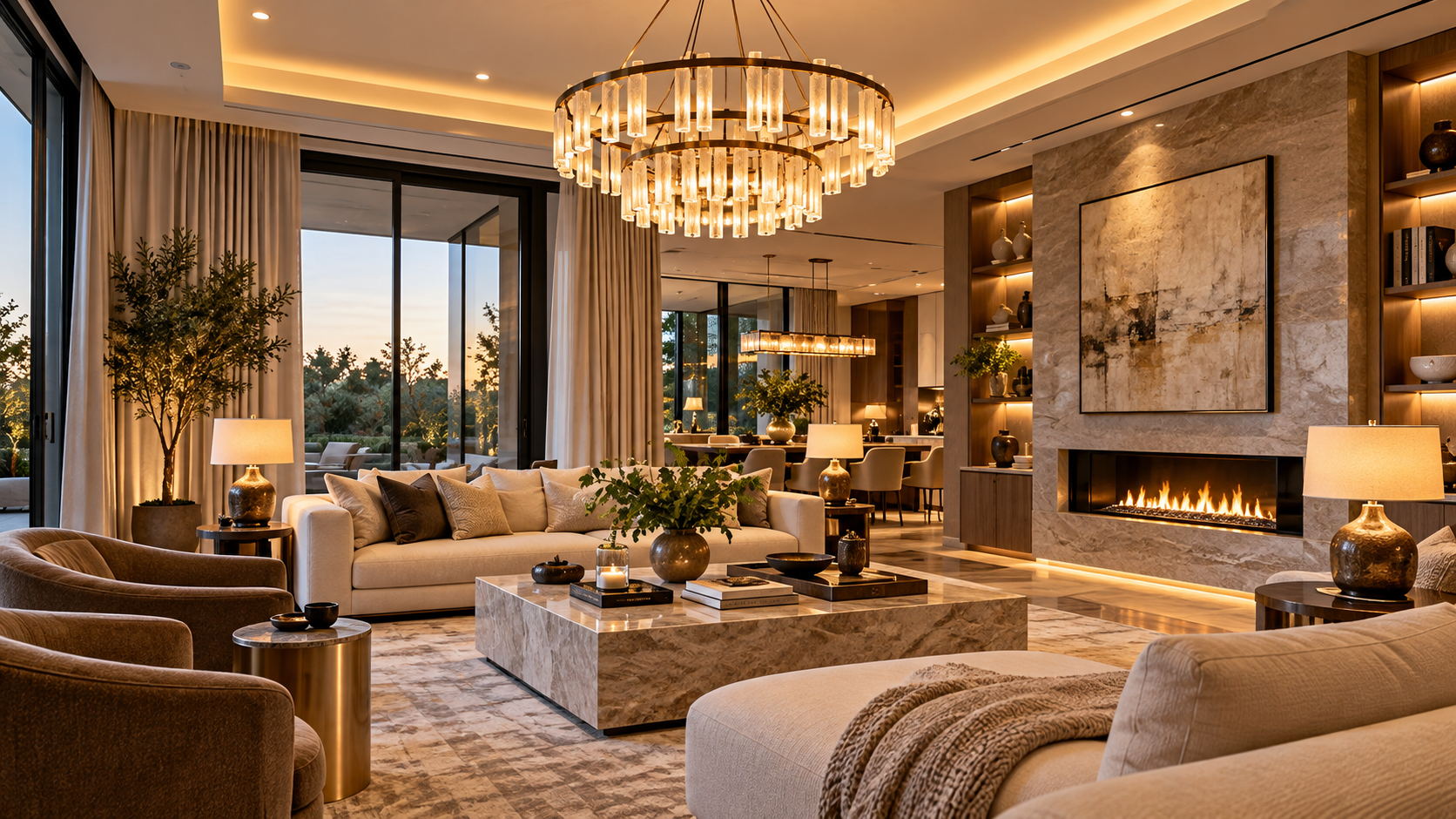
A chandelier or pendant can anchor the room, particularly when positioned over a central seating arrangement or in a space with generous ceiling height.
The fixture should relate to the room’s scale and architectural character. An oversized chandelier can overwhelm a modest living room, while a tiny pendant may look insignificant in a large, open space.
Consider the overall composition, including the ceiling, furniture arrangement, window placement, and sightlines from adjacent rooms.
Add Lamps at Different Heights
Table lamps and floor lamps introduce light closer to eye level, creating a more intimate atmosphere.
Place a table lamp on a side table beside the sofa or use a floor lamp to illuminate a reading chair. In larger living rooms, multiple lamps can help define separate seating areas.
Fabric shades soften the appearance of light, while glass, metal, and sculptural ceramic bases can contribute to the room’s decorative character.
Highlight Artwork and Architectural Features
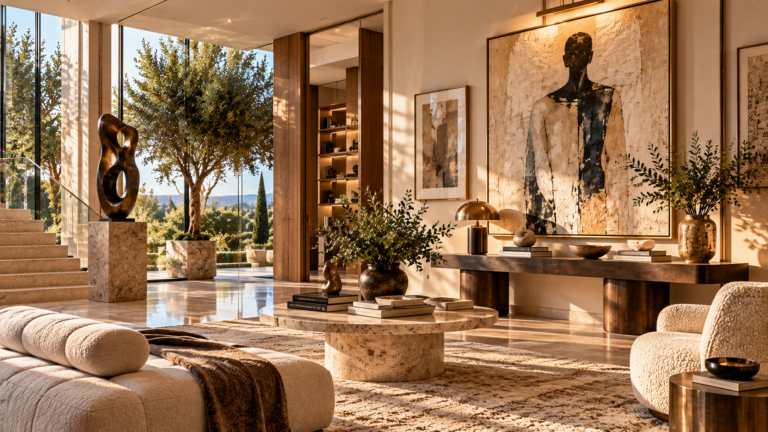
Picture lights, adjustable spotlights, and discreet wall washers can draw attention to artwork, textured surfaces, or architectural details.
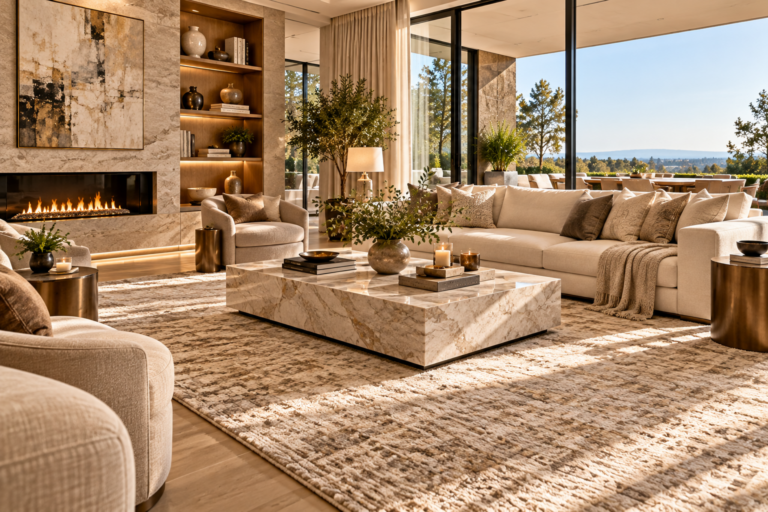
If the living room includes a fireplace, consider how the lighting interacts with the mantel, surrounding stonework, and seating arrangement.
Avoid directing strong light toward television screens or reflective surfaces where glare may become distracting.
Create More Than One Lighting Scene
A thoughtfully designed living room should not rely on a single lighting setting.
Consider three practical scenes:
- Everyday living: comfortable ambient lighting with selected lamps.
- Entertaining: balanced illumination across seating areas and focal points.
- Evening relaxation: lower ambient levels, warm lamps, and restrained accent lighting.
Separate switches or compatible dimming controls make these scenes easier to achieve.
For additional furniture and styling ideas, explore our guide to making a living room look expensive without overdecorating.
5. Create a Relaxing Lighting Scheme for the Bedroom
Bedroom lighting should support rest while remaining practical for reading, dressing, and everyday routines.
A layered approach works particularly well.
Choose a Soft General Light
A ceiling fixture, flush mount, or understated pendant can provide general illumination. The style should complement the bed, headboard, bedside tables, and overall proportions of the room.
In a bedroom with a tall ceiling, a carefully scaled pendant or chandelier may introduce a refined focal point. In a smaller bedroom, a compact fixture can provide a cleaner visual balance.
Use Bedside Lighting Strategically
Bedside lamps, wall-mounted reading lights, and adjustable sconces are practical alternatives to relying entirely on ceiling lighting.
Wall-mounted fixtures can free up space on narrow nightstands. Adjustable reading lights allow each side of the bed to be used independently.
Pay attention to shade height and light direction. The source should be comfortable for someone sitting up in bed and should not create unnecessary glare.
Illuminate Closets and Dressing Areas
Closets and wardrobes benefit from useful, even illumination. Integrated lighting can help make clothing and accessories easier to see.
For dressing areas, choose lighting that renders colors accurately. A high color-rendering index, or CRI, is useful when selecting light sources for areas where clothing colors, makeup, or personal grooming matter.
Keep the Atmosphere Adaptable
Use dimmable general lighting where practical, along with separate bedside controls. This makes it easier to move from getting dressed in the morning to winding down at night.
Our guide to designing a luxury bedroom explores how lighting works alongside bedding, furniture placement, color, and natural materials.
6. Design Functional and Elegant Kitchen Lighting
Kitchens need to be both attractive and highly functional. A beautiful pendant cannot compensate for poorly illuminated countertops, and excessive ceiling lighting can create harsh reflections on polished surfaces.
The most effective approach combines general illumination, task lighting, and selected decorative fixtures.
Illuminate the Work Surfaces
Under-cabinet lighting is particularly useful because it directs light onto countertops, where food preparation takes place.
Position the light source to reduce shadows from wall cabinets and the person working at the counter. Diffused fixtures can also help minimize visible bright spots on reflective stone.
Choose Pendants for Kitchen Islands
Pendant lights can define a kitchen island and connect the lighting scheme to the room’s overall style.
When selecting them, consider:
- The length and width of the island.
- Ceiling height.
- The size and number of fixtures.
- Sightlines across the kitchen.
- Glare when seated or standing.
- The visual relationship with nearby cabinetry and finishes.
There is no universal rule for how many pendants an island requires. One substantial fixture, a pair of pendants, or a carefully spaced group may all work, depending on the island’s proportions.
Coordinate the Light With the Materials
Stone countertops, glossy cabinetry, brushed metal, and glass can all interact differently with light.
Highly polished surfaces may reflect bright sources, while matte finishes generally produce softer reflections. Test lighting against actual finish samples whenever possible.
For open-plan homes, coordinate kitchen lighting with the adjoining dining and living areas. The fixtures do not need to match, but their finishes, proportions, and color temperatures should feel related.
7. Make Bathroom Lighting Comfortable and Practical
Bathroom lighting requires particular attention to visibility, moisture protection, and electrical safety.
A well-designed scheme typically combines general illumination with effective mirror lighting.
Light the Face Evenly
Lighting positioned on both sides of a mirror can help reduce the strong facial shadows often created by a single overhead source.
A well-designed vertical light or appropriately designed mirror fixture can provide more even illumination for shaving, skincare, and makeup.
Choose light sources with good color rendering and a color temperature that complements the rest of the bathroom. Warm or neutral-white light is often a comfortable choice for residential bathrooms.
Add Soft Ambient Illumination
Recessed ceiling fixtures, wall sconces, or concealed lighting can provide a softer atmosphere for evening routines.
If the bathroom includes a freestanding bathtub or a distinctive stone wall, carefully placed accent lighting can emphasize those features without making the room feel overly bright.
Treat Safety as a Design Requirement
Bathroom fixtures must be suitable for their location and exposure to moisture. The required protection depends on whether a fixture is near a shower, bathtub, or other wet area and on the applicable local electrical code.
Use appropriately rated products and have installations reviewed or completed by a qualified electrician. Decorative appeal should never take priority over electrical safety.
8. Use Hallway and Entryway Lighting to Establish the Mood
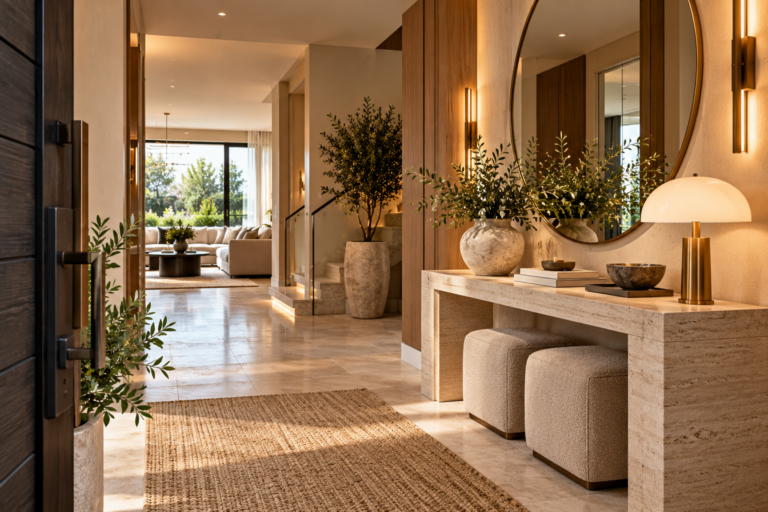
The entryway creates the first impression of a home. Lighting can make it feel welcoming while emphasizing architectural proportions and materials.
In a foyer with a high ceiling, a chandelier or pendant may serve as a focal point. In a narrow hallway, discreet ceiling fixtures or wall sconces may provide a more suitable solution.
Consider the following elements:
- Scale: Choose fixtures that suit the width and height of the space.
- Rhythm: In a long hallway, repeated fixtures can create visual continuity.
- Artwork: Picture lights or adjustable accent lighting can highlight selected pieces.
- Mirrors: Position light sources to avoid uncomfortable glare and distracting reflections.
- Transitions: Keep the lighting color and general atmosphere compatible with adjoining rooms.
A large entrance does not necessarily need an elaborate fixture. A simple, beautifully proportioned pendant can be just as effective when it relates well to the architecture.
For narrow hallways, wall washing can help emphasize wall finishes and create a sense of depth.
9. Add Depth to Dining Rooms With Thoughtful Lighting
The dining room is an ideal place to combine decorative lighting with a comfortable atmosphere.
A chandelier or pendant positioned over the dining table establishes a natural focal point and visually connects the fixture to the furniture.
The fixture should be proportionate to the table and positioned to preserve comfortable sightlines between people seated across from one another.
Dimming is particularly valuable in this space. Brighter illumination can support everyday meals and practical tasks, while lower levels can create a more intimate setting for evening entertaining.
Additional wall sconces or discreet accent lighting may help balance the room, particularly when the dining table is surrounded by artwork, cabinetry, or architectural detailing.
Avoid allowing a decorative pendant to become the only useful light source. The surrounding room should remain comfortably illuminated, even when the table light is dimmed.
10. Highlight Natural Materials and Architectural Details
Luxury interiors often rely on materials with distinctive textures and subtle variations, including marble, travertine, natural wood, plaster, and textured fabrics.
Lighting can reveal these qualities, but the direction and intensity of the light matter.
Use Wall Washing for a Soft, Even Effect
Wall washing spreads illumination across a surface to create a relatively even appearance.
It can work well on selected walls, built-in shelving, and architectural features where a calm, understated effect is desired.
Use Grazing to Emphasize Texture
Wall grazing places light at a shallow angle to a surface, emphasizing texture and creating stronger highlights and shadows.
It can be effective on textured stone, brick, and certain plaster finishes. However, it may also reveal unevenness or imperfections, so test the effect before committing to a permanent installation.
Make Wood and Stone Look Natural
Warm lighting can complement walnut, oak, and other wood finishes. However, overly warm or poorly rendered light can distort their natural colors.
Similarly, marble and travertine can look very different depending on the direction, color, and intensity of illumination.
If you are selecting stone finishes for a project, our guide to marble, travertine, and porcelain explains how their appearance and practical characteristics differ.
Whenever possible, evaluate material samples under the actual lighting you intend to use.
11. Select Fixtures That Complement the Interior
Lighting fixtures are both functional products and decorative objects. Their materials, silhouettes, and finishes should support the overall design rather than compete with it.
Brass and Bronze
Warm brass and bronze finishes can complement natural wood, cream upholstery, and warm stone.
They work particularly well in interiors that combine traditional craftsmanship with contemporary forms.
Glass and Crystal
Glass pendants and crystal chandeliers can introduce transparency, sparkle, and visual interest.
Choose them according to the room’s scale and the amount of visual detail already present. A highly decorative fixture may be most effective in a relatively restrained interior.
Black and Dark Metal
Blackened metal and dark bronze can create definition in contemporary interiors, especially against light ceilings and neutral walls.
These finishes can also help connect lighting fixtures with window frames, furniture hardware, or other architectural details.
Natural and Textured Materials
Ceramic, alabaster, linen, and other tactile materials can add softness and character.
Their appearance depends on the specific product and how it transmits, reflects, or diffuses light. When shopping, examine the fixture both when switched on and when switched off.
The best choice is not necessarily the most expensive one. Consider craftsmanship, material quality, proportions, light distribution, maintenance, and how well the fixture will work over time.
12. Bring Natural Daylight Into the Lighting Plan
Artificial lighting is only one part of a successful lighting design. Natural daylight influences how a room feels, how colors appear, and how much artificial illumination is needed throughout the day.
Start by considering window placement, glazing, curtains, and the way sunlight moves through the room.
Light-colored walls can help reflect daylight, while mirrors may redirect light depending on their placement and the surrounding surfaces.
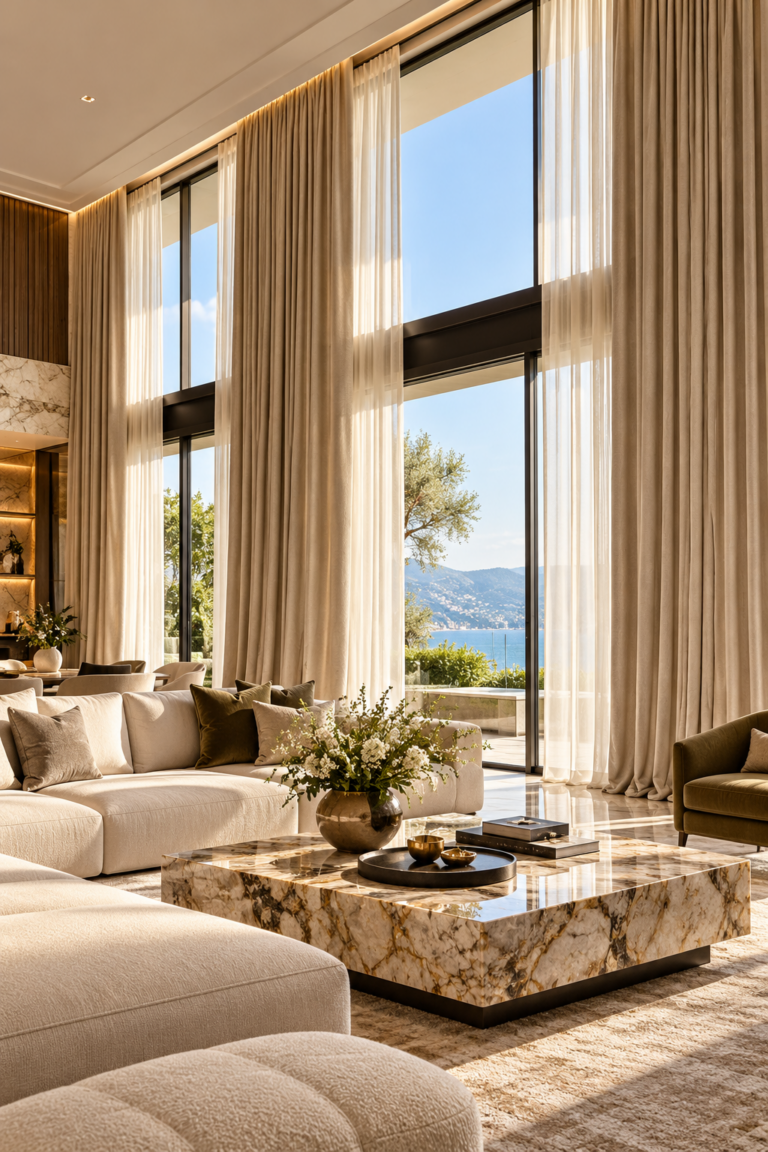
Sheer window treatments can soften daylight while preserving a degree of brightness and privacy. Heavier curtains may be appropriate where greater light control is needed.
Avoid assuming that every room needs the same artificial lighting throughout the day. A bright room with generous windows may need relatively little ambient illumination during daylight hours, while a windowless hallway will require a more deliberate artificial lighting plan.
A well-designed scheme responds to changing conditions rather than treating lighting as a fixed setting.
13. Consider Smart Lighting and Lighting Controls
Smart lighting can make a luxury home more convenient, but the system should be chosen according to actual needs rather than novelty.
Useful features may include:
- Dimming from compatible wall controls.
- Scheduled lighting for daily routines.
- Scenes for entertaining, working, or relaxing.
- Motion-activated illumination in selected circulation areas.
- Remote control of compatible fixtures.
- Integration with an existing home automation system.
Before buying smart bulbs or switches, check compatibility with the existing wiring, dimmers, fixtures, and control platform. Not every LED bulb works with every dimmer, and some installations require specific drivers or control equipment.
For a new build or major renovation, consider planning lighting circuits and controls before walls and ceilings are finished.
For an existing home, start with a few high-value improvements, such as dimmable living room lighting or convenient bedside controls. Expand the system only if those changes genuinely improve everyday use.
14. Common Luxury Lighting Mistakes to Avoid
Even expensive fixtures can produce disappointing results when the overall lighting plan is poorly considered.
Relying entirely on ceiling lights
A room illuminated only from above may feel flat or harsh. Combine general lighting with appropriately placed lamps and accent sources.
Choosing fixtures that are too small or too large
A fixture should relate to the room’s dimensions, ceiling height, furniture, and architectural style. Evaluate the actual product dimensions before purchasing.
Mixing incompatible color temperatures
Noticeable differences between nearby light sources can make materials and finishes appear inconsistent. Test the intended lamps together.
Ignoring glare
Bare bulbs, poorly positioned downlights, and reflective surfaces can cause discomfort. Consider viewing angles, beam direction, diffusers, and fixture placement.
Overusing recessed lighting
Recessed fixtures can be useful, but a ceiling filled with downlights may look busy and provide little atmosphere. Use them where they serve a clear purpose.
Forgetting about dimming
A single brightness level may not suit every activity. Where practical, use compatible dimmers or separate lighting circuits to create more flexibility.
Ignoring maintenance
High ceilings, delicate shades, exposed glass, and intricate chandeliers can require regular cleaning or specialized access. Consider how fixtures will be maintained before installation.
Treating decorative appearance as the only priority
A beautiful fixture should also provide suitable illumination, fit the space, meet safety requirements, and remain practical for daily use.
15. A Practical Luxury Home Lighting Checklist
Before purchasing fixtures or beginning installation, review the following checklist.
- Identify the main activities performed in each room.
- Plan ambient, task, and accent lighting where appropriate.
- Measure the room, ceiling height, and relevant furniture.
- Select suitable brightness and color temperature.
- Consider glare, reflections, and the direction of light.
- Coordinate fixture finishes with the interior materials.
- Plan switches, dimmers, and controls.
- Check fixture dimensions and installation requirements.
- Confirm appropriate ratings for damp or wet locations.
- Arrange professional electrical advice where needed.
- Test samples and lighting effects before committing to major purchases.
- Consider cleaning, replacement bulbs, and long-term maintenance.
A little planning at this stage can prevent expensive changes later.
Frequently Asked Questions
What type of lighting makes a home look luxurious?
A balanced combination of ambient, task, and accent lighting generally produces the most versatile result. Well-proportioned fixtures, comfortable light levels, controlled glare, and thoughtful placement often matter more than the price of individual products.
What color temperature is best for luxury home interiors?
Warm-white lighting around 2700K to 3000K is a useful starting point for many living rooms, bedrooms, and other residential spaces. Kitchens, bathrooms, and work areas may benefit from different choices depending on the task, materials, and desired appearance.
How many lighting fixtures should a room have?
There is no universal number. The appropriate quantity depends on the room’s size, ceiling height, natural daylight, furniture arrangement, and intended activities. Plan for the illumination each area needs instead of choosing fixtures based on quantity alone.
Are recessed lights necessary in a luxury home?
No. Recessed lights can provide discreet general or accent illumination, but they are not essential in every room. Chandeliers, pendants, wall sconces, floor lamps, and concealed lighting can also provide effective illumination when properly planned.
Is warm lighting better than cool lighting?
Neither is universally better. Warm light often supports a relaxed residential atmosphere, while neutral or cooler light may be useful for certain tasks and contemporary design schemes. The most suitable choice depends on comfort, color rendering, room function, and consistency across the space.
Can lighting make a small room feel larger?
Lighting can influence the perception of space. Illuminating walls, reducing harsh shadows, distributing light across different areas, and making good use of daylight can help a room feel more open. However, lighting cannot compensate for every limitation in layout or proportions.
Should all lighting fixtures in a home match?
No. Fixtures should feel coordinated, but they do not need to be identical. Consistent finishes, complementary shapes, appropriate scale, and compatible light quality can create cohesion while allowing each room to have its own character.
Is professional lighting design worth considering?
Professional advice can be especially valuable for new builds, major renovations, high ceilings, complex architectural lighting, and integrated control systems. A qualified lighting designer can help coordinate light levels, fixture placement, controls, and the architectural details of a project.
Electrical work should be completed in accordance with applicable local codes by appropriately qualified professionals.
The Casa Élite Perspective
Exceptional residential lighting is not about making every corner brighter or filling a home with statement fixtures. It is about understanding how light interacts with architecture, materials, furniture, and the people who use each space.
A well-lit home feels comfortable during ordinary daily routines and adapts gracefully to different occasions. A reading lamp makes a quiet evening more enjoyable. Carefully placed kitchen lighting supports practical work. Soft bedroom illumination encourages relaxation, while a thoughtfully selected chandelier can give an entrance or dining room a memorable focal point.
The most successful lighting schemes combine beauty with function. They use brightness selectively, respect the character of natural materials, minimize glare, and allow the atmosphere to change throughout the day.
When planning your own home, start with the activities each room must support. Build the lighting in layers, choose fixtures that suit the architecture, and test your selections before making major commitments.
The result can be a home that feels refined without being overstated—a place where lighting quietly enhances every detail.