How to Make a Living Room Look Expensive Without Overdecorating
A luxurious living room does not need to be filled with expensive-looking furniture or decorative objects. The most sophisticated spaces often feel elegant because every element has a purpose.
The right proportions, natural materials, layered lighting, refined textures, and a carefully edited selection of furniture can make an ordinary living room feel considerably more elevated.
For more inspiration, explore our guide to 10 Elements That Make a Home Look Quietly Luxurious, with timeless ideas for creating a refined and elegant home.
Here are 10 ways to create a living room that feels expensive without overdecorating.
1. Start With a Refined Color Palette
A restrained palette creates an immediate sense of sophistication. Warm ivory, soft beige, taupe, muted brown, natural stone and subtle charcoal tones can create a calm foundation without making the room feel flat.
Instead of introducing many competing colors, allow a small number of complementary shades to repeat throughout the furniture, walls, flooring and accessories.
2. Invest in One Exceptional Sofa
The sofa is usually the visual and functional centerpiece of a living room.
Rather than filling the room with multiple pieces, choose one beautifully proportioned sofa with high-quality upholstery. Linen, wool, bouclé and other tactile fabrics can add depth while maintaining an understated appearance.
A well-designed sofa can make the entire room feel more considered.
3. Choose a Statement Coffee Table
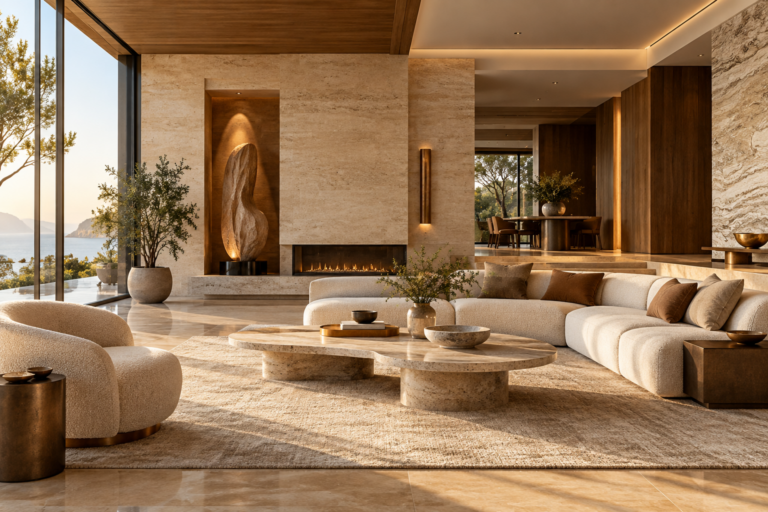
A coffee table can provide an architectural focal point without requiring excessive decoration.
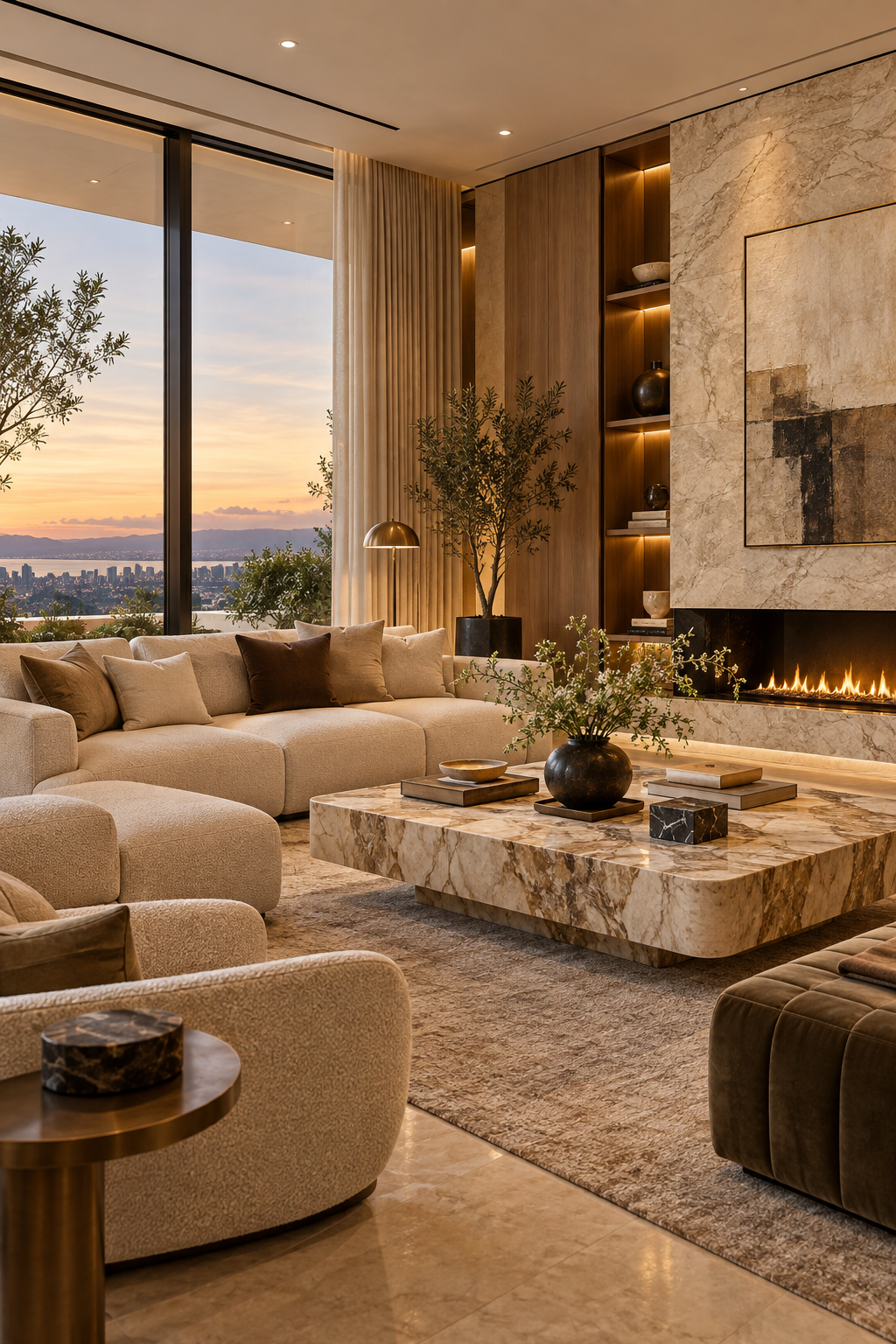
Consider natural stone, travertine, marble, walnut or another beautifully finished material. A sculptural silhouette can be more impactful than several smaller decorative objects.
The goal is to create one strong visual element rather than competing focal points.
4. Layer the Lighting
Luxury is often felt through atmosphere rather than decoration.
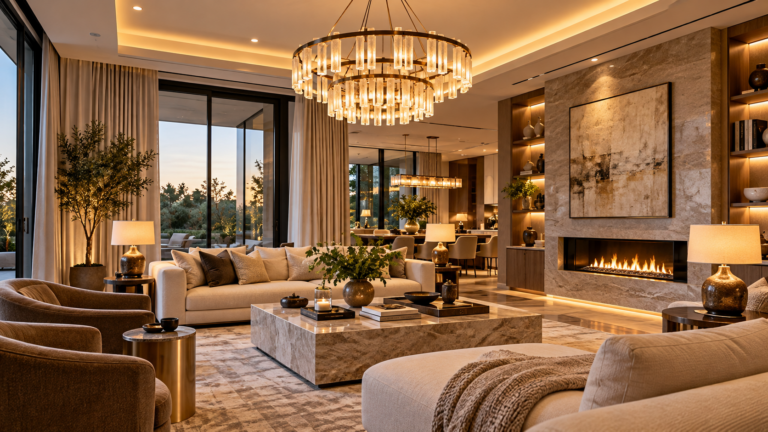
Instead of relying on a single ceiling fixture, combine ambient lighting with floor lamps, table lamps, wall lighting and subtle architectural illumination.
Warm, carefully positioned lighting can highlight textures, artwork and architectural details while creating a softer evening atmosphere.
5. Use Natural, High-Quality Materials
Authentic materials bring visual depth that synthetic finishes often struggle to reproduce.
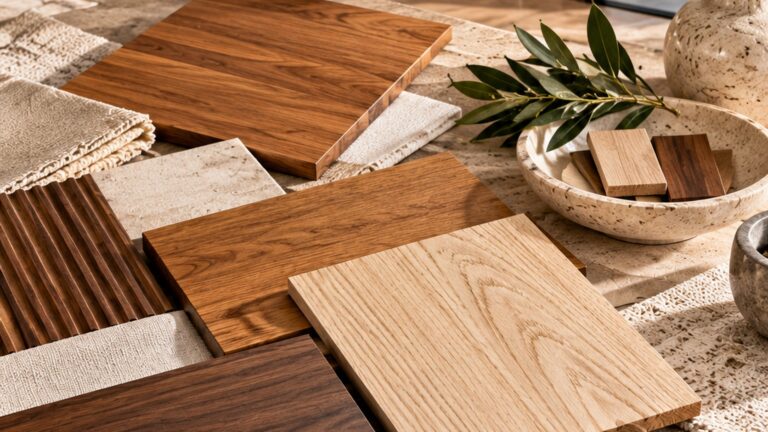
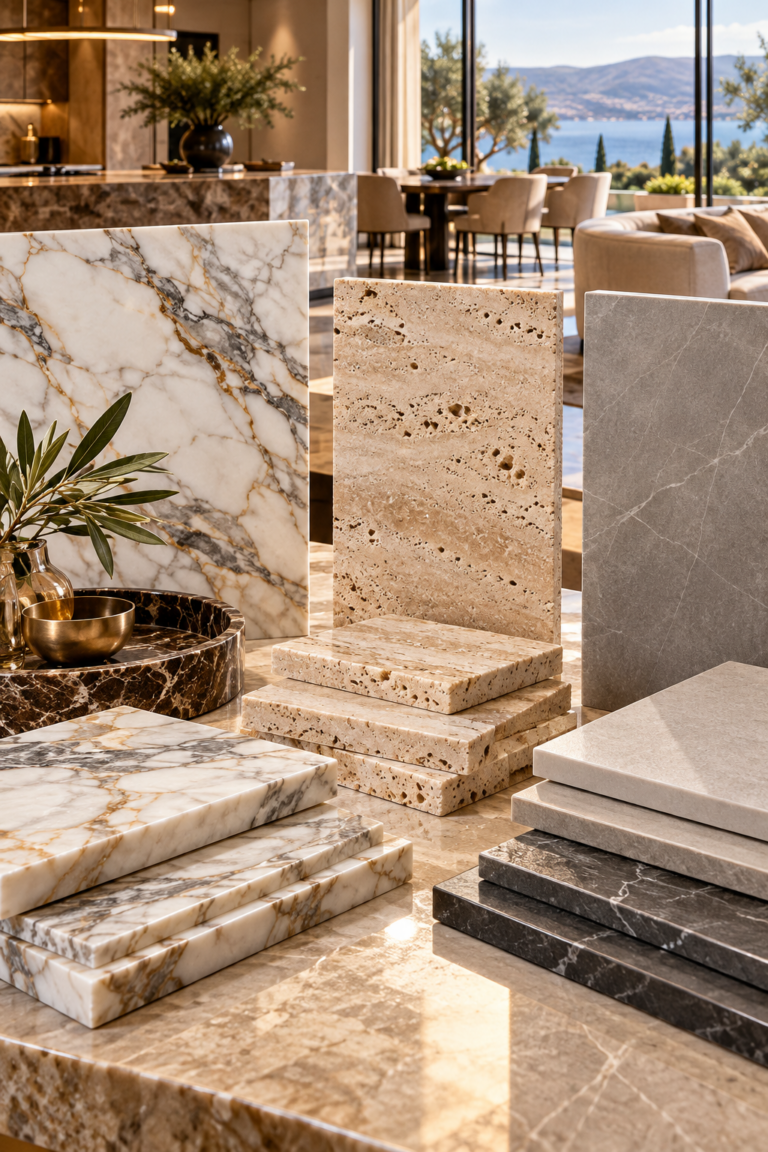
Natural wood, limestone, marble, travertine, linen, wool and aged metals can introduce subtle variations in texture and tone.
These materials do not need to dominate the room. Even a few carefully selected natural elements can make the overall interior feel more sophisticated.
6. Add Texture Instead of More Decor
When a neutral living room feels incomplete, adding more objects is not always the answer.
Instead, introduce texture.
Combine smooth stone with woven fabrics, soft upholstery, natural wood, textured rugs and subtly finished metals. Layering different tactile surfaces creates visual interest while keeping the room restrained.
7. Create Balance With Negative Space
One of the most overlooked elements of an expensive-looking interior is empty space.
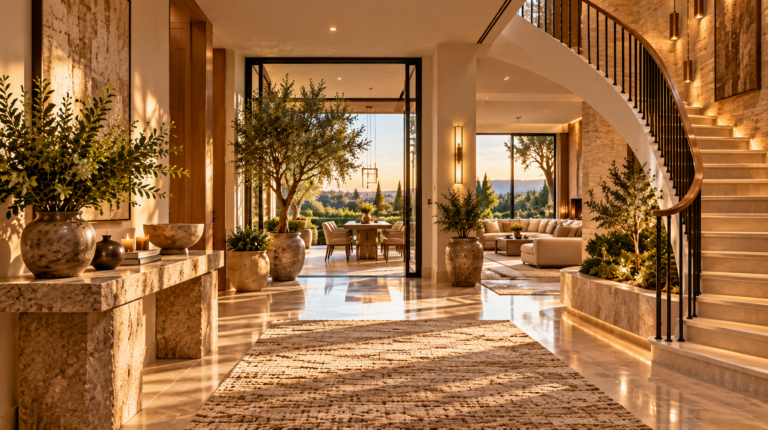
Furniture does not need to fill every corner, and every surface does not need decoration. Generous circulation areas and intentionally open spaces allow architectural features and important furniture pieces to stand out.
Restraint often creates a stronger impression than abundance.
8. Choose Art With Intention
Artwork can give a living room personality, but more artwork does not necessarily create a more sophisticated result.
Choose pieces that complement the scale, palette and architecture of the room. A single large artwork can sometimes have greater impact than a collection of unrelated smaller pieces.
The goal is to create visual harmony rather than simply fill an empty wall.
9. Use Curtains to Elevate the Room
Window treatments can dramatically influence how polished a living room feels.
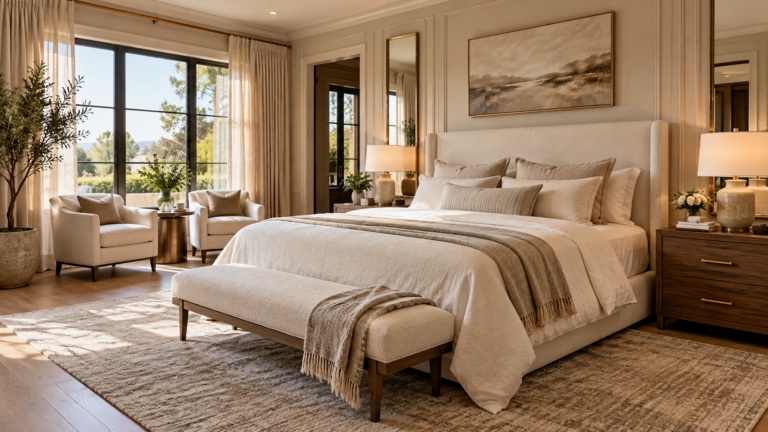
Floor-to-ceiling curtains in linen, cotton or another refined fabric can emphasize ceiling height and soften the architecture. Keep the color understated and allow the material and proportions to provide the visual interest.
Well-designed curtains can make a room feel taller, calmer and more finished.
10. Keep Decorative Objects Selective
Luxury interiors rarely depend on dozens of accessories.
Instead, select a small number of meaningful objects such as sculptural ceramics, books, stone vessels or carefully chosen decorative pieces.
Give each object enough space to breathe. A beautifully edited arrangement will usually feel more sophisticated than a crowded collection.
The Casa Élite Perspective
An expensive-looking living room is not necessarily defined by expensive furniture.
True sophistication comes from proportion, materiality, atmosphere and restraint. When every element has a clear purpose, the room feels intentional rather than decorated.
The most timeless living rooms allow beautiful materials, thoughtful lighting, comfortable furniture and carefully selected details to create the sense of luxury naturally.
At Casa Élite, we believe that exceptional interiors are not about adding more. They are about choosing better, creating balance, and allowing every detail to contribute to the overall experience.