How to Choose Art for a Luxury Home: Scale, Placement, and Style
Art can transform a well-designed interior into a home with personality, depth, and a distinctive point of view. It introduces color, creates visual interest, and can connect furniture, architecture, and materials into a more cohesive composition.
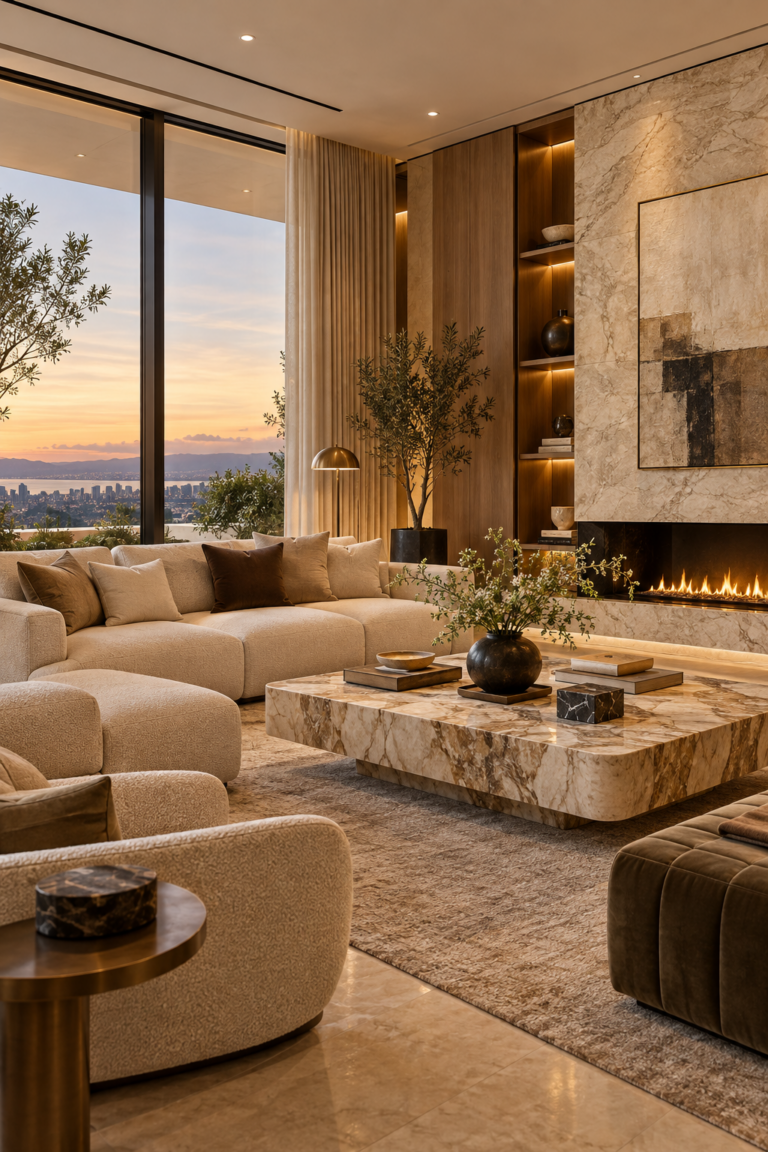
In a luxury home, choosing artwork is not simply about selecting an expensive painting. The strongest results come from considering scale, placement, framing, lighting, and the relationship between the artwork and the room around it.
Whether you prefer contemporary painting, photography, traditional works, or sculptural pieces, these principles can help you make thoughtful choices.
1. Start With the Room, Not the Artwork
Before choosing a piece, consider the room where it will be displayed. Look at the wall dimensions, ceiling height, furniture arrangement, natural light, and existing color palette.
A large, quiet room may benefit from one substantial artwork that gives the space a clear focal point. A smaller room might work better with a carefully scaled piece that complements the furniture without overwhelming it.
Notice the architectural character, too. A minimalist interior may suit expressive contemporary art, while a traditional home may accommodate landscapes, portraits, or works with historical references. These are possibilities rather than strict rules: contrast can be equally effective when it feels intentional.
The objective is to choose art that belongs in the space without making everything look overly coordinated.
2. Choose the Right Artwork Size
Scale is one of the most important factors in displaying art successfully. A beautiful piece can appear insignificant when placed on a large empty wall, while an oversized work can overwhelm a narrow passage.
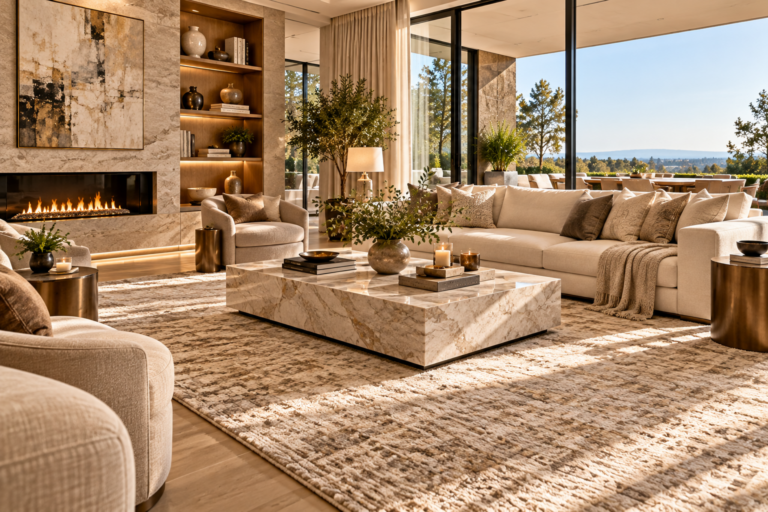
For artwork above a sofa or console, a useful starting point is to choose a piece or grouping that spans roughly two-thirds to three-quarters of the furniture width. This is a guideline, not a fixed rule; the height of the wall and the proportions of the furniture also matter.
For a tall wall, consider a vertically oriented piece or a composition that uses the available height. On a wide wall, a horizontal painting or a balanced grouping may feel more natural.
Before purchasing, measure the wall and mark the proposed artwork dimensions with painter’s tape. This simple step helps you judge scale before committing to a piece.
3. Position Art at a Comfortable Viewing Height
Artwork is usually easier to appreciate when its center sits near average eye level. In many homes, the center of a standalone piece works well around 57 to 60 inches from the floor, although the ideal position depends on the viewer, the room, and the artwork itself.
Art above furniture should be positioned in relation to that furniture rather than following the eye-level guideline mechanically. Leave enough space between the top of a sofa or console and the bottom of the frame so the composition feels connected without appearing crowded.
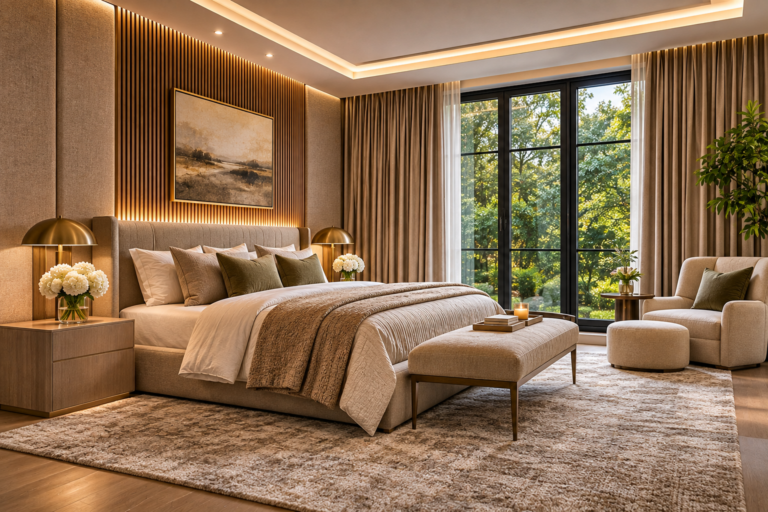
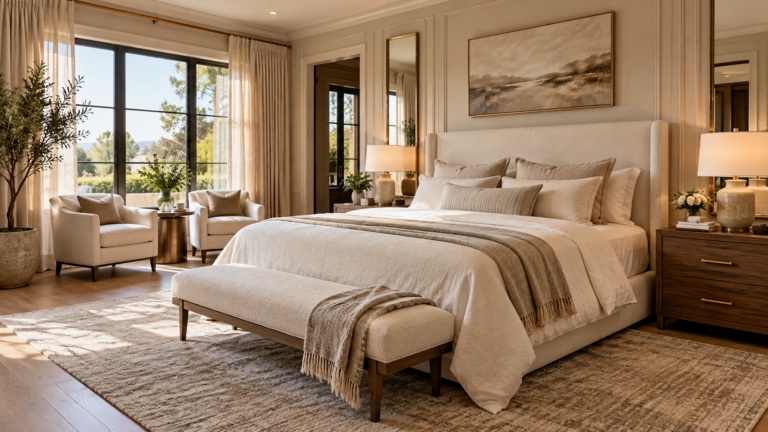
When hanging art above a bed, consider the headboard height, bedside lighting, and the visual balance of the entire wall. In dining rooms, ensure the artwork remains comfortably visible from seated positions.
Measure carefully before drilling, particularly when installing heavy frames or large pieces.
4. Select Art That Complements the Interior
Artwork does not have to match the room’s colors exactly. In fact, a piece that introduces a thoughtful contrast can give an interior more character.
A neutral room can accommodate expressive color, while a richly colored interior may benefit from a quieter composition. Consider the dominant tones in your flooring, upholstery, curtains, and architectural finishes, then decide whether the artwork should harmonize with them or introduce contrast.
Abstract painting can create movement and visual energy. Photography can bring detail, atmosphere, or a connection to a particular place. Landscapes and botanical works can introduce a natural theme, while traditional paintings may add historical depth.
Choose pieces that you genuinely enjoy living with. A personal connection will generally matter more over time than selecting art solely because it follows a current trend.
5. Understand Framing and Presentation
A frame influences how artwork relates to its surroundings. A simple timber frame can complement natural materials, while a slim metal frame may suit a contemporary setting. Traditional works can benefit from more decorative framing when it supports the piece.
Some works, including certain canvases and contemporary pieces, may be intended to remain unframed. The artist’s presentation and the artwork’s medium should guide that decision.
Consider the mat, glazing, frame depth, and overall dimensions together. A wide mat can give a small work more presence, while a narrow frame can keep attention on a bold composition.
For valuable or delicate works on paper, consult a qualified framer about suitable glazing, backing, and conservation materials.
6. Create a Cohesive Gallery Wall
A gallery wall can bring character to a staircase, hallway, study, or living area. It works best when the arrangement has a clear visual structure rather than feeling like a random collection of frames.
You can create cohesion through a shared frame finish, a consistent spacing system, a related color palette, or a common subject. Alternatively, a more eclectic grouping can work when the scale and overall composition are carefully balanced.
Lay the pieces out on the floor first, or make paper templates and attach them to the wall with removable tape. Start with a central anchor piece and build outward, checking the spacing from a distance.
Keep the arrangement appropriate to the wall and surrounding furniture. A gallery wall does not need to cover every available inch to make an impact.
7. Use Lighting to Reveal the Artwork
Good lighting helps people appreciate the texture, color, and details of a piece. Daylight can be beautiful, but direct sunlight may damage some artworks over time, causing fading or deterioration.
Where possible, avoid placing sensitive works where they receive prolonged direct sunlight. For valuable pieces, ask an art professional about suitable environmental conditions and protective measures.
Picture lights, adjustable track lighting, and carefully positioned accent fixtures can help illuminate art after dark. Select lighting that renders colors accurately and minimizes distracting glare.
For paintings behind glass, test the viewing angle and light position before finalizing the installation. A bright reflection can obscure the artwork even when the fixture itself looks attractive.
8. Consider Sculpture and Three-Dimensional Art
Art does not have to hang on a wall. Sculptures, ceramics, and other three-dimensional works can introduce depth and a different visual rhythm.
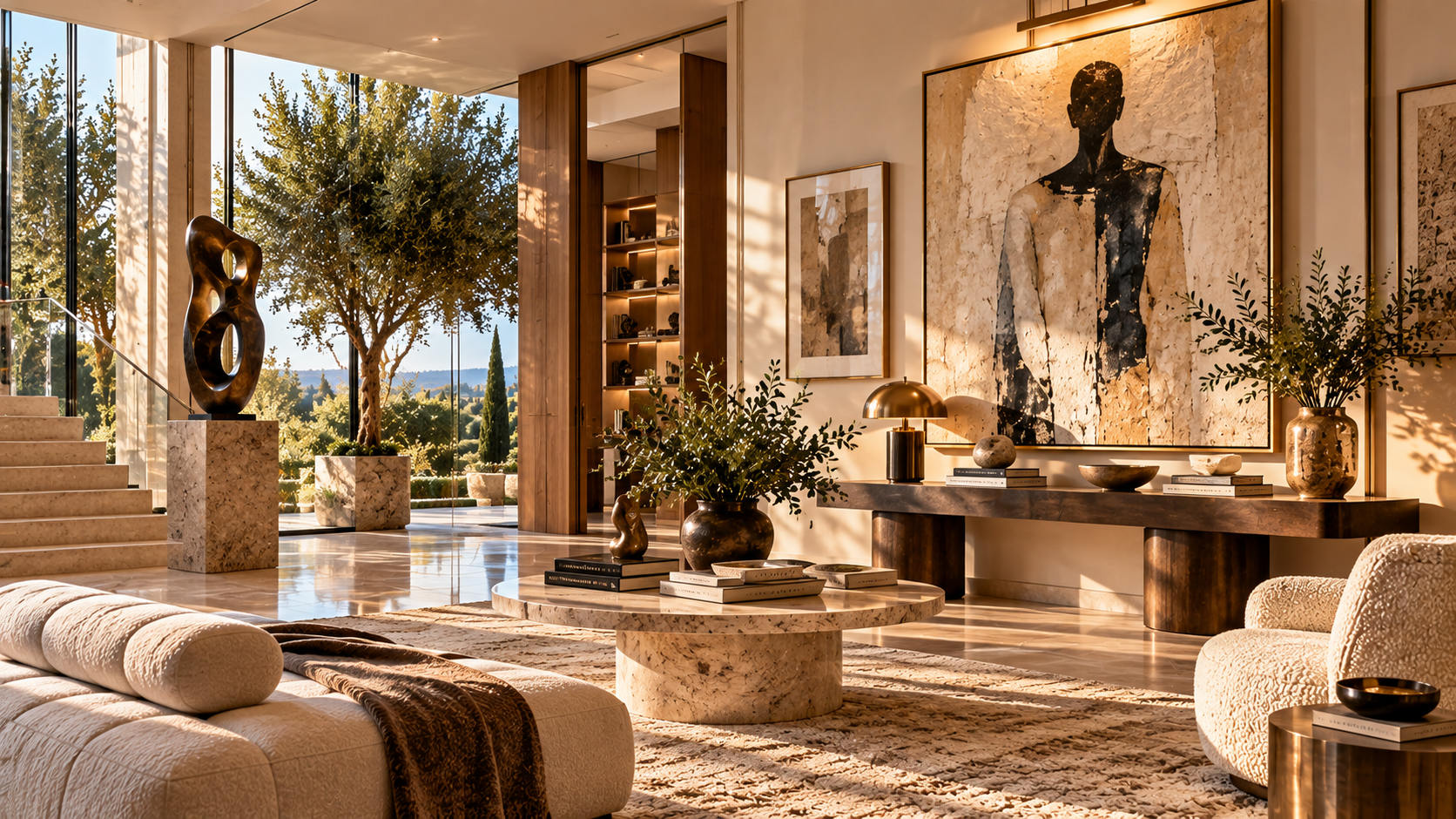
A sculptural object may work on a pedestal, a substantial console, or an open shelf with enough room around it. Larger pieces can help define an entrance or create a focal point in a spacious interior.
Consider the object’s weight, stability, material, and viewing angles. Place delicate pieces away from busy circulation routes, and ensure heavy sculptures are supported by furniture designed to carry their weight.
The best placement allows the work to be appreciated without obstructing movement or making the room difficult to use.
9. Invest Thoughtfully and Buy With Confidence
Art can be purchased at many price points. Original works, limited editions, photography, prints, and emerging artists all offer different possibilities.
Set a budget that accounts for framing, delivery, installation, and any specialist care that may be needed. Before making a significant purchase, review the artist’s information, the work’s condition, dimensions, provenance where relevant, and the seller’s return policy.
For higher-value works, consider obtaining advice from a reputable gallery, qualified art adviser, or conservator as appropriate. Do not assume that a high price alone guarantees quality or future investment performance.
Choose pieces because they suit your taste and home, not because you expect them to appreciate in value.
10. Avoid Common Art-Placement Mistakes
A few recurring mistakes can weaken an otherwise thoughtful interior:
- Choosing artwork that is too small for the wall or furniture beneath it.
- Hanging pieces too high without considering the room’s layout.
- Using frames that compete with the artwork rather than supporting it.
- Placing delicate works in harsh direct sunlight.
- Crowding a gallery wall with inconsistent spacing.
- Selecting every piece to match the furnishings exactly.
- Ignoring the weight and security of large frames or sculptures.
Take time to assess the room from different viewpoints before finalizing the arrangement. Small adjustments in height, spacing, or lighting can noticeably improve the result.
An Art-Selection Checklist
Before buying or hanging a piece, ask yourself:
- Does its scale suit the wall and surrounding furniture?
- Do I enjoy the artwork beyond its decorative effect?
- Does the color palette complement or intentionally contrast with the room?
- Is the frame appropriate for the medium and style?
- Can the piece be viewed comfortably from the main seating or circulation area?
- Is the lighting suitable, with glare and direct sunlight considered?
- Is the artwork securely installed and easy to maintain?
These questions can help you make decisions that feel considered rather than rushed.
Frequently Asked Questions
How large should artwork be above a sofa?
A useful starting point is a piece or grouping approximately two-thirds to three-quarters of the sofa’s width. Adjust the size and placement to suit the wall height, sofa proportions, and overall composition.
Should artwork match the colors in a room?
No. Artwork can complement the existing palette or provide a deliberate contrast. The important consideration is whether the combination feels balanced and intentional.
Is original art necessary for a luxury home?
No. Original art is one option among many. Photography, limited editions, prints, and other thoughtfully selected works can all contribute to a refined interior.
How can I protect artwork from damage?
Avoid prolonged direct sunlight, use suitable framing and glazing where appropriate, and follow care recommendations for the specific medium. Valuable or delicate works may require professional conservation advice.
Final Thoughts
Art brings individuality to a home in a way that furniture and finishes alone cannot. By considering scale, placement, framing, lighting, and personal meaning, you can create a collection that feels connected to the architecture while expressing your own taste.
At Casa Élite, the aim is not to fill every wall, but to select each piece with intention. A well-chosen artwork can become a lasting focal point—one that adds character to the room and becomes more meaningful as you live with it.