The Art of a Well-Designed Home Library: Creating a Space for Reading and Reflection
A home library can be much more than a room filled with bookshelves. When designed thoughtfully, it becomes a quiet place for reading, learning, reflection, and personal interests.
In a luxury home, a library can also provide a sense of permanence. Carefully designed shelving, comfortable seating, suitable lighting, and well-chosen materials can create an environment that feels both personal and functional.
However, a successful home library is not created simply by installing shelves along every wall. The space should respond to how books are used, how often the room is occupied, the amount of natural light available, and the practical requirements of preserving a book collection.
This guide explores the key principles behind designing a beautiful and functional home library.
1. Choose the Right Location
The location of a home library can influence how often it is used and how comfortable it feels.
A quieter part of the home is often preferable to an area with constant foot traffic. A dedicated room can provide the greatest sense of separation, but a library can also be incorporated into a study, living room, or another carefully planned space.
Consider the surrounding noise, access to natural light, and proximity to everyday activities.
A library near a busy kitchen or entertainment area may be less suitable for focused reading. On the other hand, a space that is too isolated may be used less frequently.
The best location balances privacy with convenient access.
2. Design Shelving Around the Collection
Bookshelves should be planned according to the size and nature of the collection rather than chosen only for appearance.
Measure typical book heights and allow for a range of shelf dimensions. Large art books and smaller paperbacks may require different shelf heights.
Adjustable shelving can provide flexibility as a collection changes. Fixed shelving can create a more integrated architectural appearance when designed around known requirements.
Avoid making every shelf identical if the collection includes books of different sizes.
Built-in shelving can create a refined and permanent appearance, while freestanding bookcases may offer greater flexibility.
Whichever approach you choose, ensure shelves are properly supported and suitable for the expected weight of the books.
3. Balance Natural and Artificial Light
Lighting is essential in a home library, but uncontrolled sunlight can affect both reading comfort and the condition of books.
Natural light can make the space feel welcoming, yet prolonged direct sunlight may contribute to fading and material deterioration over time.
Consider placing bookshelves away from intense direct sun where possible. Curtains, blinds, or suitable window treatments can help manage daylight.
Artificial lighting should support different activities.
General lighting provides comfortable overall illumination.
Reading lighting should be positioned to illuminate pages without creating uncomfortable glare.
Accent lighting can highlight selected shelves, artwork, or architectural details.
The aim is to create a comfortable environment throughout the day without relying on a single harsh source of light.
Thoughtful lighting can transform both the function and atmosphere of a home. Explore our complete guide to choosing lighting for a luxury home for more ideas on combining ambient, task, and accent lighting.
4. Create a Comfortable Reading Area
A library should encourage people to spend time in it.
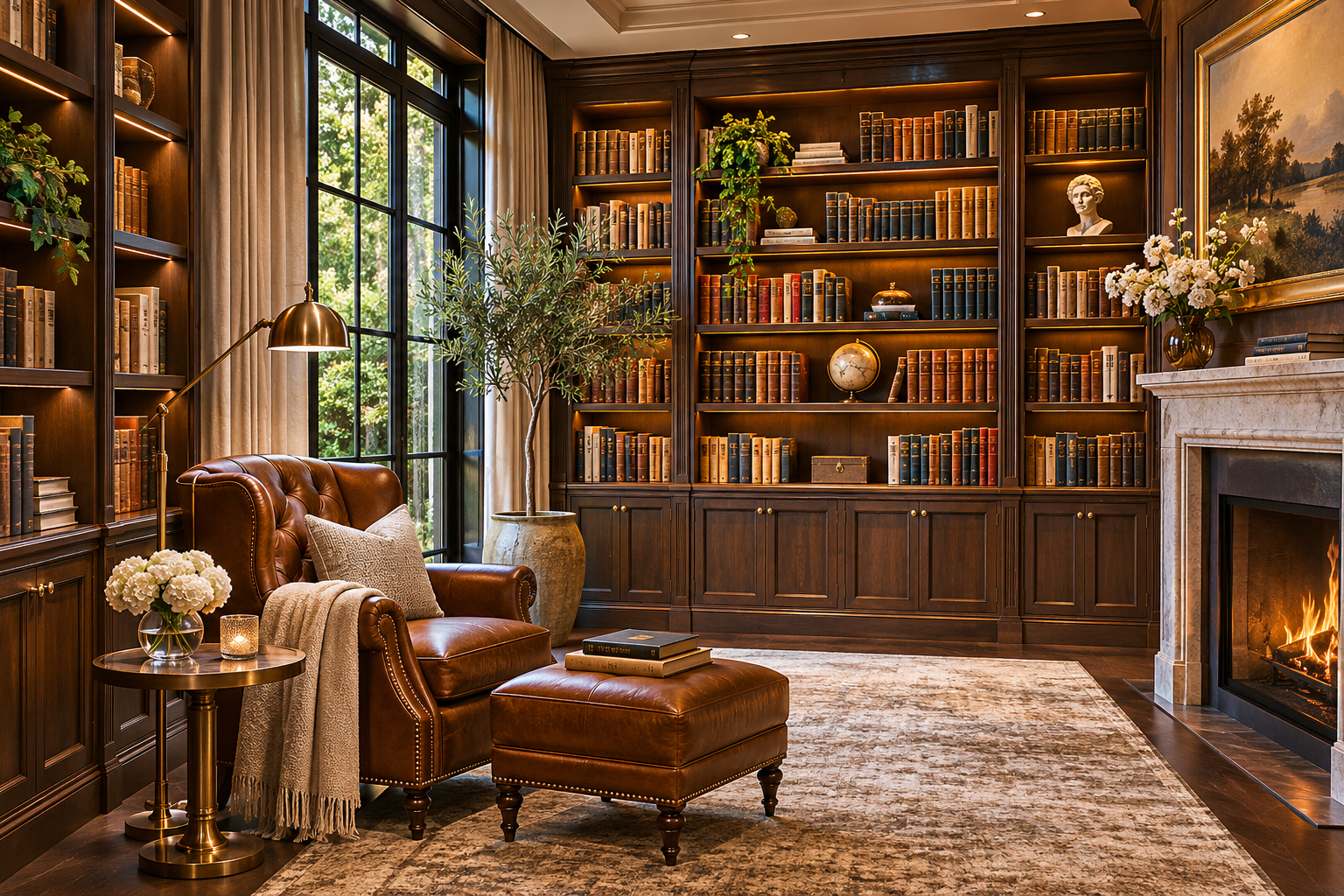
Choose seating that supports comfortable reading for longer periods. A well-proportioned armchair, supportive sofa, or carefully designed window seat can become a natural focal point.
Provide a small side table for a book, reading glasses, or a drink.
The relationship between seating and lighting is particularly important. A beautiful chair placed away from suitable light may be less useful than a simpler chair positioned near a well-designed reading lamp.
In larger libraries, consider creating more than one seating zone.
A quiet individual reading corner may coexist with a small table for research, writing, or conversation.
5. Select Materials That Create Warmth and Character
Materials can strongly influence the atmosphere of a library.
Natural timber is often used for shelving and joinery because it can introduce warmth and visual depth. However, timber is not the only option.
Painted cabinetry can create a lighter, more contemporary appearance. Metal details can introduce contrast, while natural stone may be suitable for a fireplace surround, floor, or architectural feature.
The materials should complement the wider character of the home.
A traditional library might use detailed timber joinery and classic proportions, while a contemporary library could use clean-lined shelving, textured walls, and restrained metal details.
Avoid adding too many competing finishes. A limited palette often creates a more calm and cohesive environment.
Warm timber finishes can add depth and character to a thoughtfully designed interior. Discover our guide to mixing wood tones in a luxury home for ideas on creating harmony between different wood finishes.
6. Organise Books in a Way That Works for You
There is no single correct way to organise a personal library.
Books can be arranged by subject, author, language, size, or another system that makes sense for the people using the collection.
A subject-based arrangement can make it easier to find specific books. Alphabetical organisation may be useful for larger collections.
Some people prefer arranging books by colour for a particular visual effect. This can be attractive, but it may make a collection less practical to navigate.
For frequently used books, prioritise accessibility.
Reserve higher or less convenient shelves for books that are read less often.
A library should support real use rather than functioning only as a decorative background.
7. Consider Temperature, Humidity, and Book Care
Books are affected by their environment.
Excessive humidity can encourage mould and material deterioration, while very dry conditions may affect paper and bindings. Large and frequent changes in temperature or humidity can also be undesirable for long-term preservation.
The appropriate conditions depend on the collection and local climate, but consistency is generally valuable.
Avoid placing bookshelves directly against damp walls or in locations with a history of water leaks.
If the collection includes rare or valuable books, consult a qualified conservator or preservation specialist for advice tailored to those materials.
Regular cleaning can also help prevent dust accumulation. Avoid using harsh cleaning products directly on books.
8. Use Storage for More Than Books
A library may need to accommodate more than a book collection.
Closed cabinets can store stationery, electronics, documents, or other items that would create visual clutter on open shelves.
Drawers may provide useful storage for writing supplies.
A carefully designed combination of open and closed storage can make the room more practical while preserving a calm appearance.
Leave some shelves partially open rather than filling every available space.
A small number of carefully chosen objects, framed photographs, or meaningful collections can add personality, but the books should remain the main focus.
A refined home feels more organised when storage is planned around everyday needs. Explore our guide to creating a home that looks quietly luxurious for more ideas on balancing functionality with a calm and elegant interior.
9. Integrate Technology Discreetly
Technology can make a home library more useful, but it does not need to dominate the room visually.
Power outlets near seating can support reading lights or device charging. Concealed cable management can help maintain a tidy appearance.
If the room includes speakers, a screen, or other equipment, consider whether these features can be integrated into cabinetry.
Digital reading devices can coexist with physical books, but the design should still support the main purpose of the room.
Plan technology requirements early so that wiring and outlets can be positioned before finished walls and joinery are completed.
10. Create an Atmosphere That Encourages Focus
A library should feel comfortable enough to invite regular use.
Soft furnishings can help improve comfort and reduce the sense of echo created by hard surfaces.
Rugs, curtains, upholstered seating, and other textiles can contribute warmth while also influencing the room’s acoustic character.
Choose colours that support the desired atmosphere.
Deep, warm tones can create an intimate feeling, while lighter colours may make a smaller library feel more open.
The right approach depends on the room’s size, natural light, and relationship with the rest of the home.
Avoid unnecessary distractions. A calm environment with thoughtful details can make it easier to focus.
A carefully designed room becomes more enjoyable when comfort and visual balance work together. For more inspiration, read our guide on how to make a living room look expensive without overdecorating.
Common Home Library Design Mistakes to Avoid
Even a beautifully furnished library can become less practical when important details are overlooked.
Ignoring shelf dimensions: Shelves that are too shallow or too low may not accommodate the collection properly.
Relying on one harsh light source: Reading and general use benefit from layered lighting.
Exposing books to prolonged direct sunlight: This may contribute to fading and material deterioration.
Overcrowding the shelves: Leaving some visual space can make the collection easier to enjoy and maintain.
Choosing uncomfortable seating: A library should support long periods of reading.
Forgetting environmental conditions: Humidity, leaks, and poor ventilation can affect books and finishes.
Treating the room only as decoration: A successful library should be designed around real reading and use.
Final Thoughts
A well-designed home library combines personal interests with practical planning.
The right location, carefully proportioned shelving, comfortable seating, suitable lighting, and a thoughtful material palette can create a room that feels both beautiful and genuinely useful.
The most successful libraries are not defined by the number of books they contain or the expense of their finishes. They are shaped around the habits of the people who use them.
Whether large or compact, a home library can become one of the most personal spaces in a house: a place to slow down, focus, and enjoy the quiet pleasure of reading.