The Luxury of Silence: Designing a Peaceful and Soundproof Home
Luxury is often associated with beautiful materials, generous spaces, and exceptional craftsmanship. Yet one of the most valuable qualities of a well-designed home is something that cannot be seen: silence.
A peaceful home offers a sense of privacy, comfort, and separation from the noise of the outside world. Whether it is traffic from a nearby road, sounds travelling between rooms, or everyday household activity, unwanted noise can affect how comfortable a space feels.
Creating a quieter home does not necessarily mean covering every wall with acoustic panels or undertaking extensive construction. Thoughtful choices involving windows, doors, insulation, flooring, furnishings, and room layouts can make a meaningful difference.
The key is to combine acoustic performance with an interior design approach that feels elegant and natural.
1. Understand Where Unwanted Noise Comes From
Before choosing soundproofing materials, identify the main sources of noise in your home.
External noise may enter through windows, doors, roof structures, ventilation openings, and gaps around building elements. Internal noise can travel through walls, floors, ceilings, and shared structural components.
Common sources include:
- Road traffic and nearby construction.
- Aircraft and outdoor machinery.
- Conversations travelling between rooms.
- Footsteps and furniture movement on upper floors.
- Plumbing, ventilation, and household equipment.
Different noise sources require different solutions. For example, traffic noise entering through a window may need a different treatment from footsteps travelling through a floor.
Understanding the problem first helps avoid spending money on improvements that do not address the actual source.
2. Invest in High-Performance Windows
Windows are an important consideration when designing a quieter home, particularly in properties located near busy roads or urban environments.
Standard glazing may provide limited protection against certain types of external noise. Better-performing window systems can improve acoustic comfort when they are selected and installed correctly.
Consider these features:
Laminated acoustic glass: Laminated glass incorporates a special interlayer between glass sheets. Depending on its specification and construction, it can help reduce sound transmission.
Double glazing: Two separate glass panes with an insulating cavity can improve thermal and acoustic performance. However, the result depends on glass thickness, pane spacing, frame quality, and installation.
Well-sealed frames: Even high-quality glazing can perform poorly if air gaps remain around the frame. Proper installation and effective perimeter seals are essential.
For homes exposed to significant noise, consult a window specialist about tested acoustic performance rather than choosing glazing based on appearance alone.
3. Choose Solid, Well-Sealed Interior Doors
Interior doors influence how sound travels between different areas of a home.
Lightweight hollow-core doors generally provide less sound isolation than heavier solid-core alternatives.
For bedrooms, private offices, and media rooms, consider solid-core doors with carefully fitted frames.
Pay attention to the details:
- Use appropriate perimeter seals.
- Reduce unnecessary gaps around the frame.
- Consider an automatic drop seal where suitable.
- Ensure the door closes securely without leaving large openings.
A heavy door can improve sound isolation, but the surrounding frame and gaps matter just as much.
For a sophisticated finish, choose understated timber veneers, concealed hinges, and carefully detailed hardware that complement the interior architecture.
4. Use Acoustic Wall Treatments Without Compromising Style
Acoustic wall treatments can help control sound reflections inside a room.
It is important to distinguish between sound absorption and soundproofing. Absorptive materials reduce reflected sound within a space, helping conversations and entertainment sound clearer. They do not necessarily prevent noise from passing through a wall.
Consider these design-friendly options:
Fabric-wrapped acoustic panels: These can be upholstered in colours and textures that coordinate with the room’s furnishings.
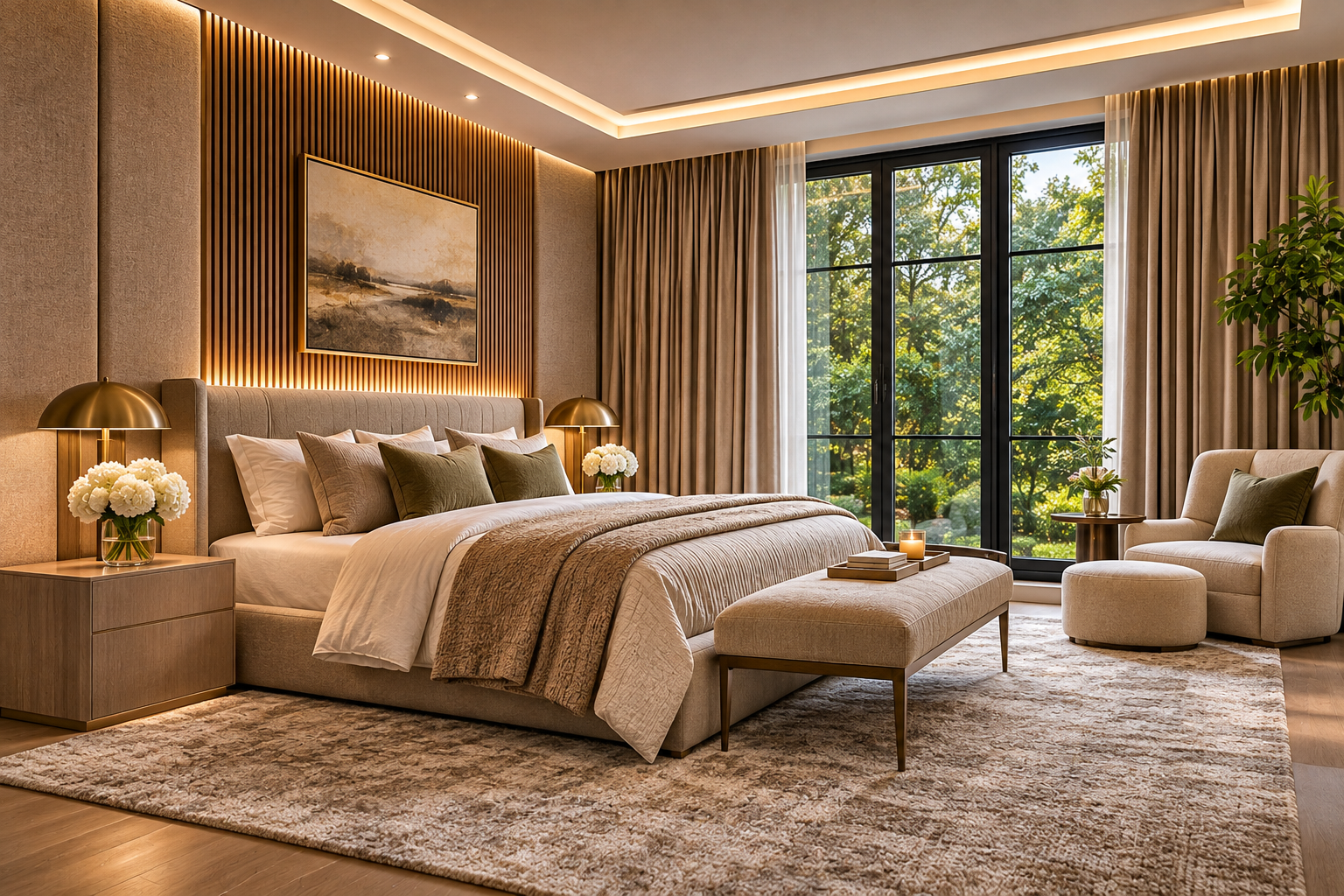
Timber slat acoustic systems: Decorative timber slats with an appropriate acoustic backing can introduce architectural detail while helping manage sound reflections.
Acoustic wall coverings: Specialised wall coverings can provide sound-absorbing benefits without making the room feel like a recording studio.
Upholstered wall sections: Carefully designed upholstered panels can soften a bedroom or private lounge while contributing to a quieter acoustic environment.
Choose products with published acoustic performance information and make sure they are suitable for the intended application.
Lighting can further enhance the warmth and atmosphere of acoustic wall treatments. Discover our guide to choosing lighting for a luxury home.
5. Select Flooring That Helps Reduce Impact Noise
Footsteps, moving chairs, and dropped objects can create considerable noise, particularly in multi-storey homes.
Hard flooring materials such as stone, tile, and timber can reflect sound and transmit impact noise through the building structure.
A suitable acoustic underlay beneath flooring may reduce impact sound, depending on the floor construction and installation method.
Other useful considerations include:
- Rugs in frequently used areas.
- Carpet in selected bedrooms.
- Properly specified underlays.
- Protective pads beneath furniture.
- Soft flooring finishes in upper-floor spaces.
For luxury interiors, rugs can serve both a decorative and practical purpose. Their material, thickness, and backing should be selected according to the flooring system and the type of noise being addressed.
The right rug can also improve the comfort and visual balance of a room. Explore our guide on choosing the right rug for every room for practical advice on materials, sizing, and style.
6. Pay Attention to Ceilings and Upper Floors
Noise travelling between floors can be particularly disruptive in homes with open-plan layouts or double-height spaces.
Footsteps and furniture movement above a bedroom may affect comfort even when the room itself is beautifully designed.
Possible solutions include:
Acoustic ceiling systems: Suspended ceilings with suitable insulation can help reduce certain forms of sound transmission when designed as part of a complete assembly.
Resilient floor construction: Properly designed floating floors and resilient layers can reduce impact transmission.
Insulation within floor cavities: Suitable acoustic insulation can help manage airborne sound travelling through floor and ceiling assemblies.
These improvements are often most effective when considered during construction or renovation. Existing structures may require an acoustic assessment to identify the most practical approach.
7. Design a Bedroom That Encourages Quiet and Rest
The bedroom should offer a comfortable separation from the noise of daily life.
Start by considering its location within the home. Where possible, position sleeping areas away from noisy streets, entertainment spaces, garages, and mechanical equipment.
Then consider the materials and details within the room.
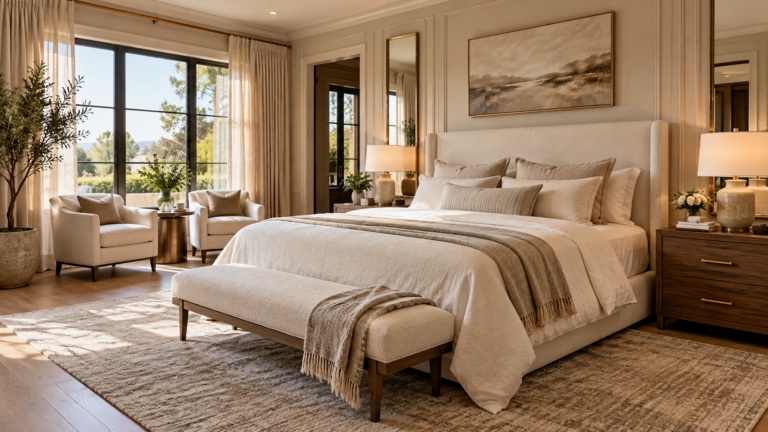
A combination of upholstered headboards, substantial curtains, soft rugs, and carefully selected furnishings can help reduce sound reflections.
Blackout curtains may also provide some additional sound absorption, although ordinary curtains should not be treated as a substitute for proper window soundproofing.
For a more complete solution, consider window performance, door seals, wall construction, and the location of mechanical systems.
A restful bedroom also depends on thoughtful layout, lighting, and material selection. Read our guide on designing a luxury bedroom for more ideas.
8. Create a Quieter Home Office
A private home office needs an environment that supports concentration, video calls, and uninterrupted work.
Start with a room that is separated from high-traffic household areas whenever possible.
Solid-core doors, suitable window glazing, and acoustic wall treatments can help create a more controlled environment.
Inside the office, consider adding:
- A large rug beneath the desk and seating area.
- Fabric-upholstered furniture.
- Bookshelves with books arranged across different depths.
- Acoustic panels that complement the room’s colour palette.
- Soft window treatments where appropriate.
Bookshelves and furnishings can help diffuse sound reflections, but they should not be considered a replacement for sound-isolating construction.
A well-planned office can feel calm and professional without sacrificing the visual character of the home.
9. Control Noise From Mechanical Equipment
Some of the most frustrating household sounds come from systems that operate throughout the day or night.
Air-conditioning equipment, ventilation fans, pumps, refrigerators, and plumbing systems can all contribute to unwanted noise.
During the design or renovation process, consider:
- Selecting appropriately quiet mechanical equipment.
- Installing equipment away from bedrooms where practical.
- Using suitable vibration-isolating mounts.
- Providing correctly designed ductwork and acoustic treatment.
- Securing pipes to reduce vibration and movement.
- Maintaining equipment to prevent unnecessary operating noise.
Mechanical systems should be designed and installed by qualified professionals. Poorly planned acoustic enclosures or blocked ventilation can create safety and performance problems.
10. Use Layout and Landscaping to Create a Peaceful Environment
A quiet home begins with more than its interior materials. The arrangement of rooms and the surrounding landscape can also influence acoustic comfort.
Where the site allows, place quieter rooms away from busy roads and outdoor activity areas.
Garages, storage rooms, bathrooms, and circulation spaces may help create a buffer between external noise and private living areas.
Landscaping can contribute to a more comfortable outdoor environment. Dense planting, garden walls, fences, and carefully designed outdoor spaces may help reduce perceived noise in certain situations, although plants alone generally provide limited sound insulation.
For more substantial noise problems, a landscape architect or acoustic consultant can assess the site and recommend suitable measures.
A peaceful atmosphere is an essential part of understated luxury. Explore 10 elements that make a home look quietly luxurious for more design inspiration.
Common Soundproofing Mistakes to Avoid
Even expensive materials may deliver disappointing results when they are used without understanding how sound travels.
Confusing acoustic panels with soundproofing: Absorbing sound inside a room is different from preventing sound from passing through a wall.
Ignoring small gaps: Sound can travel through poorly sealed doors, windows, and construction joints.
Choosing materials by appearance alone: A beautiful finish does not automatically provide good acoustic performance.
Treating curtains as a complete solution: Heavy curtains can soften reflections but cannot replace properly specified acoustic windows.
Ignoring mechanical noise: Fans, pumps, and ventilation systems may remain disruptive even after walls and windows are improved.
Making changes without assessing the structure: Effective sound isolation often depends on the complete floor, wall, ceiling, or window assembly rather than one individual product.
Final Thoughts
A peaceful home is a thoughtful combination of architecture, materials, planning, and technical performance.
High-quality windows, well-sealed doors, appropriate floor construction, acoustic wall treatments, and quieter mechanical systems can all contribute to a more comfortable living environment.
The most successful solutions are those that address the actual sources of unwanted noise while preserving the visual character of the home.
True luxury is not simply about what a space looks like. It is also about how comfortably it allows you to live.
At Casa Élite, we believe that exceptional residential design should engage every sense, creating homes that feel as peaceful and considered as they look.